Best Arm Massager (2026): Picks for Forearm, Bicep, and Tennis Elbow Recovery
Accessories
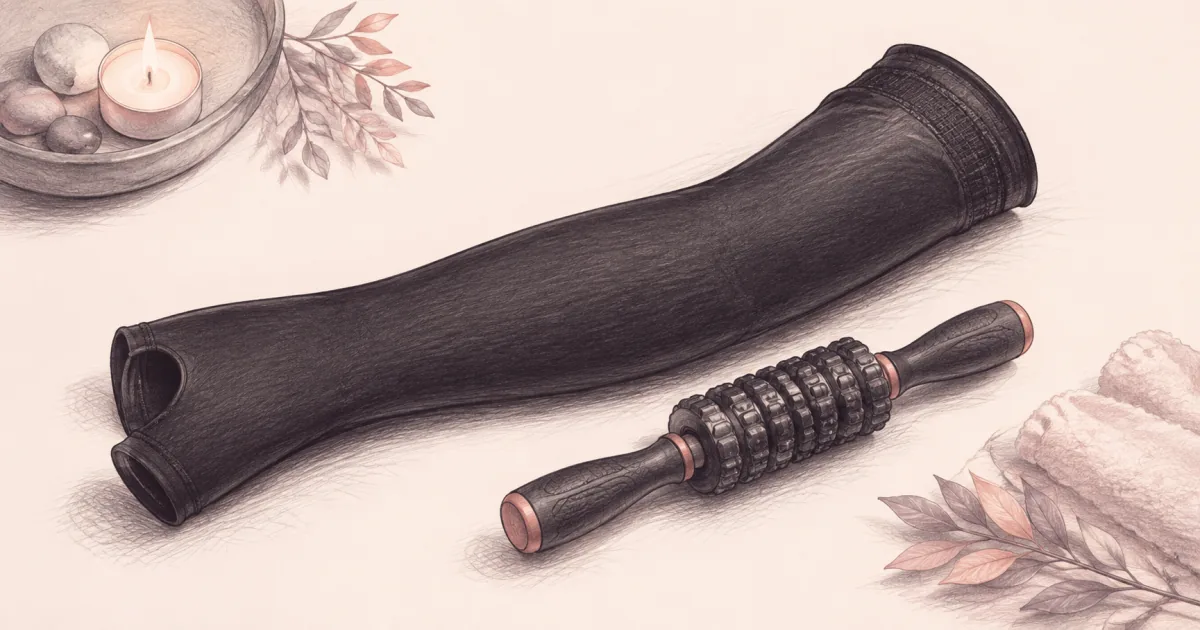
The best arm massager for most home buyers is the Comfytemp K1065 full-arm compression sleeve because it covers hand through upper arm in one cordless sleeve. The Roleo roller is the manual pick when you want deep forearm work without a battery or a sleeve to fit over the arm.
Our picks
An arm massager is one of those recovery tools that earns its space the moment your forearm starts barking after a long day at a desk or a heavy lifting session. The two styles in this guide do different jobs.
A compression sleeve wraps the arm and pushes blood through the forearm with airbags, which is the same idea behind lymphedema sleeves and post-workout recovery boots. A manual roller sits on a table and lets you press the forearm against it, which targets the deeper tissue around the elbow and wrist.
This guide is for US buyers building a small home recovery kit around the arm, not a clinical setup. The picks below are real Amazon listings, sized for home use, and verified to ship in the US. For the rest of the recovery kit, start with the best hand massager for typing-related finger soreness, the best shoulder massager for upper trap tension, and the best massage gun for spot work on a tight bicep. Browse the rest of the body-part gear on the accessories category hub.
What to buy: a sleeve and a roller
You do not need both. Most buyers end up with one, then add the second when they hit the limits of the first.
- Compression sleeve: The Comfytemp K1065 is a cordless full-arm sleeve with a 360-degree airbag layout, three pressure levels, and a 2500 mAh battery that runs two to three hours per charge. Best for buyers who want broad compression across hand through upper arm without holding a tool.
- Manual roller: The Roleo roller is a manual forearm massager invented by a licensed massage therapist, with a suction-cup base that sticks to a glass table. Best for buyers who want deep, targeted pressure on the forearm and elbow without a battery or a sleeve to size.
Comfytemp K1065: best for most arms
The Comfytemp K1065 is the everyday pick. It is a sleeve that slides over the hand and rests against the upper arm. Inside the sleeve, airbags inflate and deflate in cycles to push blood back toward the heart. The pattern is similar to a lymphedema sleeve, but the fit is sized for upper arms between 11 and 15 inches, which covers most adults.
The 360-degree airbag layout is the trick. Most cheaper sleeves only compress one side of the arm, so the squeeze feels uneven. The K1065 wraps the full circumference, so the compression feels uniform around the bicep, tricep, forearm, and wrist. Three pressure settings let you start low on the first session and step up once you know what your arm can take.
The 2500 mAh battery runs two to three hours per charge, which is enough for a week of fifteen-minute sessions. The control box has physical buttons for power and pressure, and Comfytemp also ships an app if you want to swap between modes without leaning over. The cordless design means you can use the sleeve while sitting at a desk, watching a show, or recovering after a workout.
The recurring tradeoff is sizing. If your upper arm is outside the 11 to 15 inch range, the sleeve will not seal correctly, and the compression will feel weak. Very large arms sometimes need a larger sleeve that Comfytemp sells separately. The sleeve is also compression-only, so it does not have the kneading nodes you would find on a massage chair or the percussion of a massage gun. It feels like a slow rhythmic squeeze, not a kneading session.
Pick the Comfytemp K1065 if you want a cordless sleeve that covers the full arm. Skip it if your upper arm does not fit the sizing chart, or if you want targeted pressure on a specific forearm muscle.
Roleo roller: best for manual forearm work
The Roleo roller is the second half of the kit, and the one most buyers with tennis elbow or forearm tendonitis end up using. It is a manual roller invented by a licensed massage therapist, with a suction-cup base that sticks to a glass or smooth sealed table. The user lays the forearm against the roller and leans in, which lets the roller dig into the tissue around the elbow and wrist without a battery or a sleeve.
The targeted pressure is the reason to buy it. A compression sleeve pushes blood through the whole arm, but it does not isolate a single adhesion. A forearm roller lets you park the device on a specific spot, lean your weight onto it, and hold the pressure for thirty to sixty seconds. That is the move most buyers with chronic forearm tightness describe in their reviews, and it is closer to what a massage therapist does with their forearm and elbow during a session.
The suction-cup base is the practical detail. Sticks best to glass, polished stone, or a sealed wood table. Does not stick to textured wood, fabric, or carpet. Most buyers set up at a kitchen counter or a glass desk and move the roller between sessions.
The recurring tradeoff is manual effort. A roller requires the buyer to set the pressure by leaning, which is harder on a sore elbow than a sleeve that inflates to a fixed level. Buyers with significant forearm pain sometimes find a sleeve more comfortable, and they add the roller once the worst soreness has eased. The Roleo also has no heat, so it does not replace a heating pad for cold forearms.
Pick the Roleo roller if you want manual forearm work without a sleeve or a battery. Skip it if your table is not smooth, or if you want a session that runs itself while you read or watch a show.
How to set up an arm massager routine
Most home buyers use an arm massager for fifteen to twenty minutes after the activity that irritated the arm. For a desk day, run the Comfytemp K1065 sleeve during the last hour of work to ease the tension that built up through the afternoon. For a heavy lifting day, run the sleeve within thirty minutes of finishing to push blood through the forearm, then add the Roleo roller for spot work on the tightest spot.
Start at the lowest pressure setting on the sleeve for the first session, even if you think you can handle more. The first session is mostly about whether the sleeve fits your arm correctly. Step up to a higher pressure on the second session if the lowest setting felt comfortable. With the roller, lean in lightly on the first pass and increase pressure over a few sessions as the tissue loosens.
Skip the session if the arm is swollen, hot to the touch, or recovering from a recent injury. None of these tools treat inflammation or injury. They are comfort tools for the soreness that follows normal use.
Sizes, pressure, and what to look for
Most compression sleeves fit upper arms between 11 and 15 inches. Measure the circumference of your upper arm at the thickest point, usually near the bicep, before ordering. The K1065 includes a sizing chart in the listing that walks through how to measure. If your arm sits outside the chart, the sleeve will leak air around the top and the compression will feel weak.
Pressure level matters more than battery life. Three pressure settings is enough range for most arms. A sleeve with one fixed pressure either feels too soft or too tight, and a sleeve with seven pressure settings usually has settings that no human actually uses. The K1065 sits in the useful middle.
Battery life matters for the way you want to use the sleeve. Two to three hours per charge covers a week of fifteen-minute sessions, which is what most buyers need. A sleeve with a six-hour battery is overkill unless you want to use it for longer sessions, which is not how most arm sleeves are designed to run.
A manual roller has no sizing, no battery, and no settings to worry about. The only practical concern is the table surface. Smooth and sealed is what the suction cups need. A textured wood table, a fabric mat, or a carpeted floor will not hold the roller in place during a session.
Common tradeoffs when you skip this category
The cheapest arm massager is a tennis ball leaned against a wall. It works for the forearm in a pinch, but the pressure is uneven and you cannot adjust the spot once you are leaning. A foam roller is wider than a tennis ball and reaches deeper into the tissue, but it rolls too freely for precise forearm work. A dedicated arm massager, either a sleeve or a roller, is the tool that earns its space when the basic options stop working.
A vibration-only massager with no compression or kneading feels like a buzzy hand-held wand on the arm. It does not push blood through the forearm and does not target the deep tissue around the elbow. Buyers who try a vibration massager first often come back to a compression sleeve or a forearm roller because the effect is more lasting.
A TENS unit can hit the same soreness from a different angle, by stimulating the muscle with electrical pulses. A TENS unit is useful for short-term pain relief, but it is a different category from a compression sleeve or a forearm roller. The best TENS unit is the right tool for buyers who want electrical muscle stimulation. The picks in this guide are for buyers who want compression or rolling pressure.
Bottom line
Buy the Comfytemp K1065 full-arm compression sleeve if you want a cordless sleeve that covers the hand through the upper arm with adjustable pressure and a two-to-three hour battery. It is the everyday pick and the one most home buyers end up with. Buy the Roleo roller if you want a manual tool that targets forearm and elbow adhesions without a sleeve or a battery. Skip vibration-only wands and skip the cheapest tennis-ball substitutes; both stop working once the soreness gets specific.
Pair whichever you pick with a heating pad if your forearms run cold, and add a wrist brace for overnight motion control on a sore wrist. The rest of the body-part recovery gear lives on the accessories category hub.
Frequently Asked Questions
What is the best arm massager for most home buyers?
The Comfytemp K1065 full-arm compression sleeve is the best arm massager for most home buyers. It is a cordless sleeve that uses airbags to compress the hand, wrist, forearm, and upper arm in one session. Three pressure levels let you find a setting that feels supportive instead of tight, and the 2500 mAh battery runs two to three hours per charge. Pick the Roleo roller if you want manual forearm work without a sleeve or a battery.
What does an arm massager actually do?
An arm massager uses one of two approaches. A compression sleeve wraps the arm and inflates airbags in cycles to push blood through the forearm and bicep, which feels like a slow rhythmic squeeze. A manual roller sits on a table and lets you press the forearm against it, which targets the deeper tissue around the elbow and wrist. Both are comfort tools, not medical treatment, and neither replaces a clinician for arm pain that persists past a week.
Is an arm massager good for tennis elbow?
A compression sleeve can ease the soreness around the elbow after activity, and a forearm roller can loosen the tissue that pulls on the sore tendon. Both are useful as part of a home routine, but neither treats the underlying tendinopathy. Persistent pain on the outside of the elbow, or pain that flares during gripping, deserves a clinician's eye rather than a longer session on the device.
Can I use an arm massager every day?
Most buyers use one for fifteen to twenty minutes after a workout or a long day at a desk, and that is a sensible starting point. A compression sleeve can be used daily as long as the pressure setting feels supportive rather than painful. A manual roller can be used daily too, but stop if you notice sharp pain, numbness, or skin bruising on the forearm. Skip the session if the arm is swollen or if you have a recent injury that has not been cleared by a clinician.
Arm massager vs hand massager: which one do I need?
A hand massager focuses on fingers, palm, and wrist, and uses air chambers to squeeze the hand. An arm massager covers the longer stretch from hand through upper arm, and either compresses the whole arm or rolls the deeper tissue in the forearm. Most buyers with typing-related hand fatigue start with a hand massager. Most buyers with lifting, gripping, or tennis-elbow soreness want an arm massager instead.
Do arm massagers help with circulation?
Compression sleeves squeeze the arm in cycles, which moves blood back toward the heart and is the same idea behind medical compression sleeves for lymphedema and post-workout recovery. A manual roller does not move blood the same way; it works on the muscles and tendons. If circulation is the main goal, a compression sleeve is the better tool.
What is the difference between an arm massager and a massage gun?
A massage gun is a handheld percussion tool that you move around the body, and the buyer decides where the pressure goes. An arm massager is either a sleeve that wraps the arm or a roller that sits on a table, and the device decides where the pressure lands. A massage gun is better for spot work on a tight bicep. An arm massager is better for broad compression or forearm rolling without holding a tool.
How do I pick the right size compression sleeve?
Measure the circumference of your upper arm at the thickest point, usually near the bicep. The Comfytemp K1065 fits upper arms between 11 and 15 inches, which covers most adults. If your measurement sits outside that range, the sleeve will not seal correctly and the compression will feel weak. A manual roller has no sizing, which is one reason it is still a useful second tool to keep on hand.
Can I use an arm massager if I have a pacemaker?
No. Compression sleeves use electrical pumps, and the rhythmic electrical activity can interfere with implanted devices like pacemakers or defibrillators. A manual roller is safer, but always clear it with your cardiologist before adding any new recovery tool to your routine. The same caution applies to people who are pregnant, have deep vein thrombosis, or have active cancer in the arm.