Best Knee Pillow for Side Sleepers (2026): Alignment That Holds
Accessories
If you wake up with hip or lower back ache, the top leg is probably dropping forward all night. A knee pillow stops that, and the shape matters more than the brand.
Our picks
If you sleep on your side and wake up with a hip ache or a stiff lower back, the pillow you are missing is probably the one between your knees. The Contour Legacy Leg and Knee Pillow is the pick for most people, with the Everlasting Comfort Knee Pillow as the choice for restless sleepers who need it held in place.
Here is the problem it solves. When you lie on your side, your top leg does not stay stacked on the bottom one. It slides forward, the thigh rotates, and your pelvis follows. Eight hours of that is why the ache shows up in your hip and lower back rather than anywhere you would expect.
A knee pillow is a small, boring fix for that. It holds the legs apart at knee height so the hips stay square, and it takes up a fraction of the bed that a body pillow does.
If you want the rest of the sleep and recovery kit, the recovery accessories lane starts with the massage gun picks. For the pillow side, our cervical pillow guide covers neck alignment and the lumbar support pillow guide covers sitting support. This page is about the one that goes between your legs.
What a knee pillow is supposed to fix
A knee pillow is not a comfort cushion. It is an alignment tool for one specific problem.
Side sleeping stacks your shoulders, hips, and knees in one plane. Your top leg breaks that stack. It drops forward and down, which rotates the pelvis and puts a twist through the lower back. If you have ever woken up with one-sided hip pain that faded after you got moving, that is the shape of it.
The pillow restores the stack. It sits between the thighs and holds the top leg level, so the hip stays over the bottom hip instead of rolling forward.
Two things make a knee pillow work or fail. The shape has to cradle the leg so it does not roll off, and the foam has to be dense enough not to collapse under a full night of weight. A soft pillow that flattens by 3 a.m. is doing nothing for you by morning.
Quick comparison
Both are contoured memory foam. The difference is how they stay in place. One relies on its shape, the other on a strap.
Contour Legacy Leg and Knee Pillow
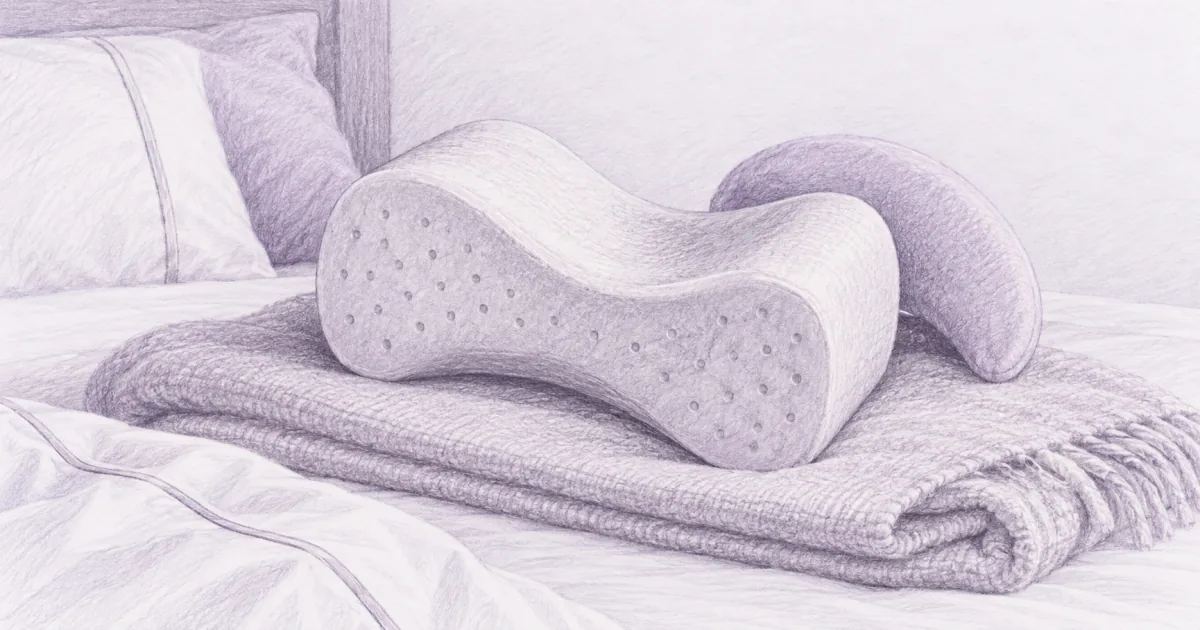
This is the top pick, and the shape is the reason. Instead of a simple wedge, the pillow is curved so it sits under both legs and cups around each knee. That spreads the support instead of creating one pressure point, and it means the top leg rests on the pillow rather than balancing on it.
The foam is medium firm with air channels molded through it. It compresses under weight and comes back when you shift, so the pillow still has height at 4 a.m. The covering is removable and washable, which matters more than people think for something you sleep against every night.
There is no strap. That is a feature for anyone who has had one cut into a thigh, and a small risk if you move constantly. Owners describe a short adjustment period, then nights where they notice it only when it is missing.
It is also smaller than the product photos suggest, so if your thighs are thick you may want the pillow sitting higher than the obvious spot. Buy it if you want strap-free support and you sleep warm. Skip it if you thrash in your sleep and need something physically attached to you.
Everlasting Comfort Knee Pillow
This is the pick for restless sleepers. The removable strap sits around one thigh and keeps the pillow with you as you turn, which is exactly the problem the strap-free version cannot solve.
The shape is a dual concave curve, so both knees and legs settle into the pillow rather than resting on top of it. The foam is high density and firm, and the cover comes off for washing. It is a compact pillow, small enough that it does not disturb the covers when you briefly end up on your back.
Two things to know. The strap is the wear point, and a few owners find the foam too large for a petite frame, so smaller sleepers should expect a bulkier feel than the photos suggest. The 40 percent savings on the listing right now makes it the cheaper of the two this week.
Buy it if you change position through the night or you share a bed and cannot afford a pillow that goes wandering. Skip it if straps around the thigh annoy you or if you prefer a slimmer profile.
How to place it so it works
Placement is where most people get this wrong, and it is the cheapest thing to fix.
Put the pillow between your thighs, not down at your knees. If your legs are straight and together while standing, you want the pillow where the most leg contact is, which is higher up than the knee joint. From there, the whole top leg rests on it and the hip stays square.
Then check your feet. Your top knee and top ankle should both be supported at roughly the same height. If the knee is up and the ankle is hanging, your hip is still rotating.
Give it three or four nights before you decide. Almost everyone finds the pillow obvious on night one. By night four it should be part of how you lie down.
If it keeps ending up on the floor, that is information. You either need a strap or a thinner pillow, not more effort.
Knee pillow vs body pillow vs a folded blanket
A folded blanket is free and worth testing first. Fold it to about knee height, put it between your thighs, and see whether your morning back ache changes over a week. If it does, a real knee pillow will work better because it will not squash flat halfway through the night.
A knee pillow is the compact option. It supports the legs and nothing else, it stays in one spot, and it does not eat half the bed.
A body pillow supports your chest, belly, and arms as well as your legs, which some people need and many do not. It is also much harder to roll over with, which is why a lot of side sleepers end up back at a knee pillow after trying one.
If your shoulders are the sore part rather than your hips, start with the pillow arrangement for your neck. The cervical pillow guide covers that end.
Who should skip a knee pillow
Back sleepers and stomach sleepers should skip it. The whole design assumes your hips are stacked, and if you sleep on your back there is nothing for it to align.
Skip it too if the ache only shows up during the day or after activity. A pillow cannot fix a load problem that is happening while you are upright.
And see a clinician rather than buying another pillow if the pain runs down your leg with numbness, tingling, or weakness, if it wakes you at night and keeps getting worse, or if you have a history of blood clots or circulation problems. Talk to your doctor before you start strapping anything around a thigh.
Bottom line
Start with the Contour Legacy Leg and Knee Pillow if you want strap-free support that stays cool and holds its shape all night. Choose the Everlasting Comfort Knee Pillow when you move a lot in your sleep and need the pillow to come with you, especially while the savings is on. Either way, place it between your thighs rather than at your knees, and give it a week.
Buying through the links on this page supports more guides like this at no extra cost. Browse the rest of the recovery accessories picks, or start with the blog for the full home recovery stack.
Frequently Asked Questions
Should side sleepers use a knee pillow?
If you wake up with hip, knee, or lower back soreness, a knee pillow is worth a try. When you sleep on your side, the top leg usually slides forward and pulls the pelvis with it. A pillow between the thighs keeps the legs stacked, which keeps the hips square and takes the twist out of the lower back.
What is the best knee support pillow for side sleepers?
The Contour Legacy Leg and Knee Pillow is the best pick for most people, because the hourglass shape supports both legs and knees without a strap. Choose the Everlasting Comfort Knee Pillow if you change position a lot and want a strap holding it to one leg.
What pillow do chiropractors recommend for side sleepers?
Most of them start with the same advice your doctor did: something about knee height, firm enough that it does not collapse, placed between the thighs rather than down at the ankles. The ACA-endorsed knee pillows lean on dense memory foam and a contoured shape rather than plush filling. Whatever pillow you choose, it has to hold its thickness under load, or the leg drops anyway.
Where exactly do you put a knee pillow?
Higher than most people expect. Set it between the thighs, roughly where a tall cushion would sit if you were standing with your legs together, so the whole top leg rests on it. If you put it down at the knees, the thigh above it still rotates and the hip keeps twisting. Heavier sleepers get the most out of placing it high.
Do knee pillows help sciatica?
They help the version of sciatica that gets worse from sleeping with a twisted pelvis. Taking that twist out of the night can calm the nerve irritation that builds up in bed. They do not treat nerve compression that has another cause, and pain that runs down the leg with numbness or weakness needs a clinical look.
Can you use a knee pillow while pregnant?
Yes, and side sleeping is usually the recommended position later in pregnancy. A knee pillow plus support under the belly is a smaller setup than a full body pillow, and it is easier to move when you turn over. If you are already comfortable with a body pillow, keep it.
Does a knee pillow help lower back pain?
It helps when the cause is night-time alignment. Many side sleepers wake up stiff because the top leg has been pulling the lower back out of line for hours. Owners often describe the first pain-free morning within a week. If your back pain is worse in the day than the morning, the pillow is probably not the answer.
How long does it take to get used to a knee pillow?
A few nights. Most people describe the first night as odd and the pillow as noticeable, then it becomes part of the position you sleep in. Give it a week before deciding. If it still feels bulky after that, you likely need a thinner profile rather than a different brand.