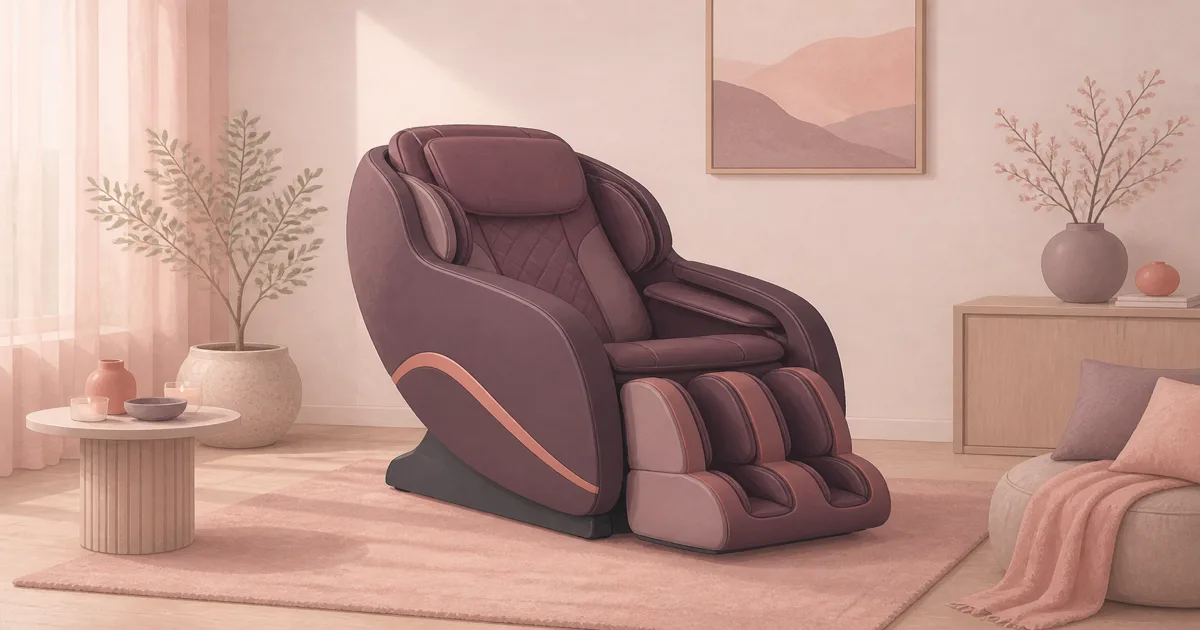
Best Massage Chair (2026): Favor-06 Starter Pick Plus Clear Alternatives
Massage chairs
The best massage chair matches roller coverage, intensity, and floor space. Most first-time buyers can start with the Real Relax Favor-06, then compare KoziSense A18 or a budget SL-track chair.
Our picks
The best massage chair for most people is the Real Relax Favor-06. It is our reference point for a basic chair done well: real roller coverage, adjustable intensity, and a recline you can live with. If you want a longer, more responsive track, the KoziSense A18 is the step up. If the budget is tighter, the Real Relax 2026 SL-Track keeps the essentials.
Shopping for the best massage chair gets messy fast. Pages push "full body" language without saying how the rollers move, how loud the motors get, or how much floor the chair eats when it reclines. Rank coverage and intensity first. Then measure reclined depth and the wall gap. PU leather in this range feels thinner than a showroom chair, and deep rollers can surprise a sensitive back on day one.
If your hard ceiling is $2,000, the best massage chair under 2000 guide narrows the field to that lane. For tight rooms, read compact massage chair. For recline language, see zero gravity massage chair. The massage chair collection collects the rest of our chair guides.
Quick comparison
What a basic massage chair should have
A basic chair is not a stripped chair. It is the set of parts that decide whether you use the thing every week or turn it into an expensive coat rack. Start here, then add features.
Look for a stable frame, a track that reaches the areas you care about, and intensity you can dial down. Heat and foot rollers are nice, but they are not the reason to buy.
The controls matter more than the spec sheet suggests. A clear remote or app, a pause button, and a child lock make everyday use easier. If you cannot figure out how to soften the rollers, you will not use them.
Finally, check the footprint when open. A chair that blocks a closet or a walkway is a chair you will stop using. Measure first.
What track type should you look for?
Prefer clear S-track, L-track, or SL-track language. An S-track follows the spine curve to the lower back. An SL-track continues farther into the glutes, which is what most first buyers want. Vague "full body" copy without a track name is a warning.
How do you test intensity before buying?
Look for adjustable strength and zone control, not just a preset list. The Favor-06 gives three roller-intensity levels, five airbag levels, and a pause button. If you cannot soften the rollers, you will stop using the chair on a sore night.
Hero pick: Real Relax Favor-06
The Real Relax Favor-06 Massage Chair (Black) is the chair to start with when the room fits a full recliner. You get SL-track coverage from neck toward glutes, zero gravity, heat, foot rollers, and a pause button you can hit when intensity jumps. Use the included back pad if the first sessions feel too aggressive.
Measure reclined depth and rear wall gap before delivery day. Confirm the color matches the photos you want. Black (B0CX1SKS7F) has been sitting near the mid-$1,200s. Faux leather will not feel like a $5,000 chair. That is the usual trade for staying under showroom prices.
Buy it if you want a first full chair with smart controls and real coverage. Skip it if you have a small room or you want the plushest materials.
KoziSense A18
The KoziSense A18 3D Massage Chair is the longer-track alternative. The SL-track plus full spine mapping means a taller sitter gets coverage that many chairs leave short. Independent air zones and lumbar heat round out the session.
It sits near the same spend lane as the Favor-06, and the extra control is the reason to pay. Buyers with smaller rooms should check the bulk, because the A18 is a large chair.
Buy it if you are taller than average or you share the chair with someone a different size. Skip it if you want one-button presets and nothing more.
Real Relax 2026 SL-Track
The Real Relax 2026 SL-Track Massage Chair is the entry point. You still get SL-track coverage, zero gravity, heat, and foot rollers, just with fewer premium controls than the Favor-06.
It is the right chair when the features you care about are the essentials and the budget is firm. The weight ceiling is lower than the higher Favor models, so check your size against the listing.
Buy it if you want SL-track and zero gravity for a lower spend. Skip it if you want app control and deeper intensity settings.
What "best" should mean for a home chair
"Best" is not the longest feature list. It is the chair you will use three or four nights a week without fighting your room.
Prioritize:
- Coverage that matches your pain points. Neck and shoulders only, or full back plus glutes and calves.
- Intensity you can dial. Soft enough for recovery nights, strong enough when your back is tight.
- Footprint when open. Width, depth, and rear clearance with the footrest out.
- Daily friction. Noise, heat controls, remote clarity, and how hard it is to get in and out.
If a page fails those four, keep scrolling.
Roller type, intensity, and recline
Rollers are the core of the session. S-track chairs follow the spine curve. L-track or SL-track chairs continue farther into the glutes. Choose based on where you feel tightness after work.
What is the difference between S-track and SL-track?
An S-track follows the natural curve of the spine and stops at the lower back. An SL-track keeps going into the glutes and upper legs. If you feel tightness low in the back after work, the longer SL-track is the one to pick.
Do you need zero gravity on a massage chair?
Not always. Zero gravity recline tilts you so your legs rise and pressure off the lower back drops, which helps longer sessions. If you mostly want neck and shoulder work while sitting upright, prioritize rollers and intensity first.
Ask for a track length description, whether rollers reach the neck and lower back without a dead zone, and whether there are manual intensity or zone controls. Vague "full body massage" copy without track details is a yellow flag. Details live in our zero gravity massage chair guide.
How much does a massage chair cost per session?
At $1,299 across three years of nightly use, about 1,095 sessions, the Favor-06 works out to roughly $1.19 a session. The A18 is about the same, and the budget SL-Track is about 80 cents. All three are far under the price of a single 60 minute massage.
Massage chair specs compared
How much floor space does a massage chair need?
The Favor-06 is 57.5 inches deep when reclined, about 4.8 feet, so budget 5 feet of rear clearance plus a walking path. Measure chair width, upright depth, reclined depth, and the recommended wall gap before delivery day.
How loud is a home massage chair?
Noise varies by motor and rollers. Read recent buyer notes about living-room use, especially if you share walls or watch TV nearby. Roller motors are audible at every setting on most chairs in this range.
Also check:
- Floor type and whether the chair slides
- Doorway and stair width for delivery
- Power outlet location so cords do not cross a walkway
- Living-room noise notes if you share walls
A chair that "fits" on paper can still fail if the reclined footrest blocks a closet.
A simple shopping checklist
- Body areas: Neck, mid-back, lumbar, glutes, calves. Rank them.
- Track: Prefer clear S-track, L-track, or SL-track language.
- Intensity: Confirm adjustable strength and zone control.
- Recline: Decide if zero gravity matters for your sessions.
- Room: Measure width, reclined depth, and wall clearance.
- Returns: Keep a return path open on a big purchase.
When the checklist is done, compare the Favor-06 against one alternative that clears the same filters. Do not widen the search to every listicle with different criteria each time.
Bottom line
Rank roller coverage and intensity first, then recline style, heat, noise, and clearance. Most shoppers can start with the Real Relax Favor-06, then move to KoziSense A18 or the Real Relax 2026 SL-Track if those tradeoffs fit better. If a full chair is too much footprint, start with a best back massager seat cushion or a best massage gun. Keep browsing Recoverypicks guides when you add heat or cold gear later.
Buying through the links on this page supports more guides like this at no extra cost.
Frequently Asked Questions
What is the best massage chair for most people?
Start with the Real Relax Favor-06 if the footprint fits. It pairs SL-track rollers, zero gravity, and adjustable intensity with heat and foot rollers you will actually use. Skip chairs that hide roller type and noise notes.
What is a basic massage chair?
A basic massage chair is a first full-size chair with the essentials: a stable frame, roller coverage for the back, adjustable intensity, and a recline. Most also add heat and foot rollers. The Favor-06 is our reference point for a basic chair done well, and our chairs under $2,000 guide narrows that list to the lower spend lane.
Do I need zero gravity on a massage chair?
Not always. Zero gravity recline helps if you want less pressure on your lower back during longer sessions. If you mostly want neck and shoulder work while sitting more upright, prioritize rollers and intensity first. See our zero gravity massage chair guide.
How much space does a massage chair need?
Measure width, depth when reclined, and wall clearance. Many chairs need several inches behind them when they open. Leave a clear path so the chair does not block a doorway.
Are cheaper massage chairs worth buying?
Budget chairs can work for light daily use if intensity and size are honest. The Real Relax 2026 SL-Track chair is a clearer entry than a no-name pad sold as a recliner. Decide your must-have features before you chase the lowest price.
How loud are home massage chairs?
Noise varies by motor and rollers. Read recent buyer notes about living-room use, especially if you share walls or watch TV nearby.
Massage chair vs seat cushion?
A full chair is for nightly whole-body sessions when you have floor space. A back massager cushion is cheaper when you only need shoulders and mid-back on a sofa.
Is a basic massage chair worth it?
Yes, if you will use it most nights and the room fits it. The point of a basic chair is the routine, not the longest feature list. Add up the monthly massage spend you are replacing, then decide. If the footprint is the blocker, a compact massage chair is the better starting point.