Best Compression Socks for Plantar Fasciitis (2026): Arch Support That Helps Morning Heel Pain
Accessories
The best compression socks for plantar fasciitis are the PAPLUS six-pair set when you want light arch support for the whole week. Choose IRAMY for breathable crew socks or BLITZU for a low-cut sleeve that hides in a shoe.
Our picks
The best compression socks for plantar fasciitis for most people are the PAPLUS Plantar Fasciitis Socks. IRAMY Compression Ankle Support Crew Socks win for long days on your feet, and BLITZU Compression Socks are the pick when you want something hidden.
Plantar fasciitis hurts worst in the morning. The first few steps after a night off your feet feel like the arch is tearing, and then it usually eases as you warm up. A sock does not fix that overnight, but a light squeeze around the arch through the day can take some of the load off the tissue and quiet the end-of-day ache.
The socks in this lane are not medical stockings. They sit at a light to moderate compression, which is what makes them wearable all day. If you need firm 20-30 mmHg support for swelling or travel, our best compression socks guide covers that range instead.
The three picks here cover the common jobs: a six-pack of arch sleeves for the week, a breathable crew sock for standing shifts, and a low-cut sleeve for sneakers. If the pain is worst overnight, pair a sock with a plantar fasciitis night splint. For the roller that works the arch before you stand, see our plantar fascia roller picks. Everything here lives in the recovery accessories aisle next to our massage gun guides.
What plantar fasciitis socks actually do
Support comes first. The sock adds compression across the arch and heel, which can steady the foot and take some strain off the plantar fascia. That is the whole mechanism, and it is why a plain tube sock does nothing for you.
Breathability is the second job. You are wearing these for hours, often in shoes, so a moisture-wicking knit matters more than you would think. A hot, damp sock gets peeled off by lunch and never goes back on.
Fit is the last piece. Compression has to be snug but not cutting, and it has to stay put when you walk. A sock that rolls down stops supporting the arch, so check the sizing chart before you buy.
PAPLUS Plantar Fasciitis Socks
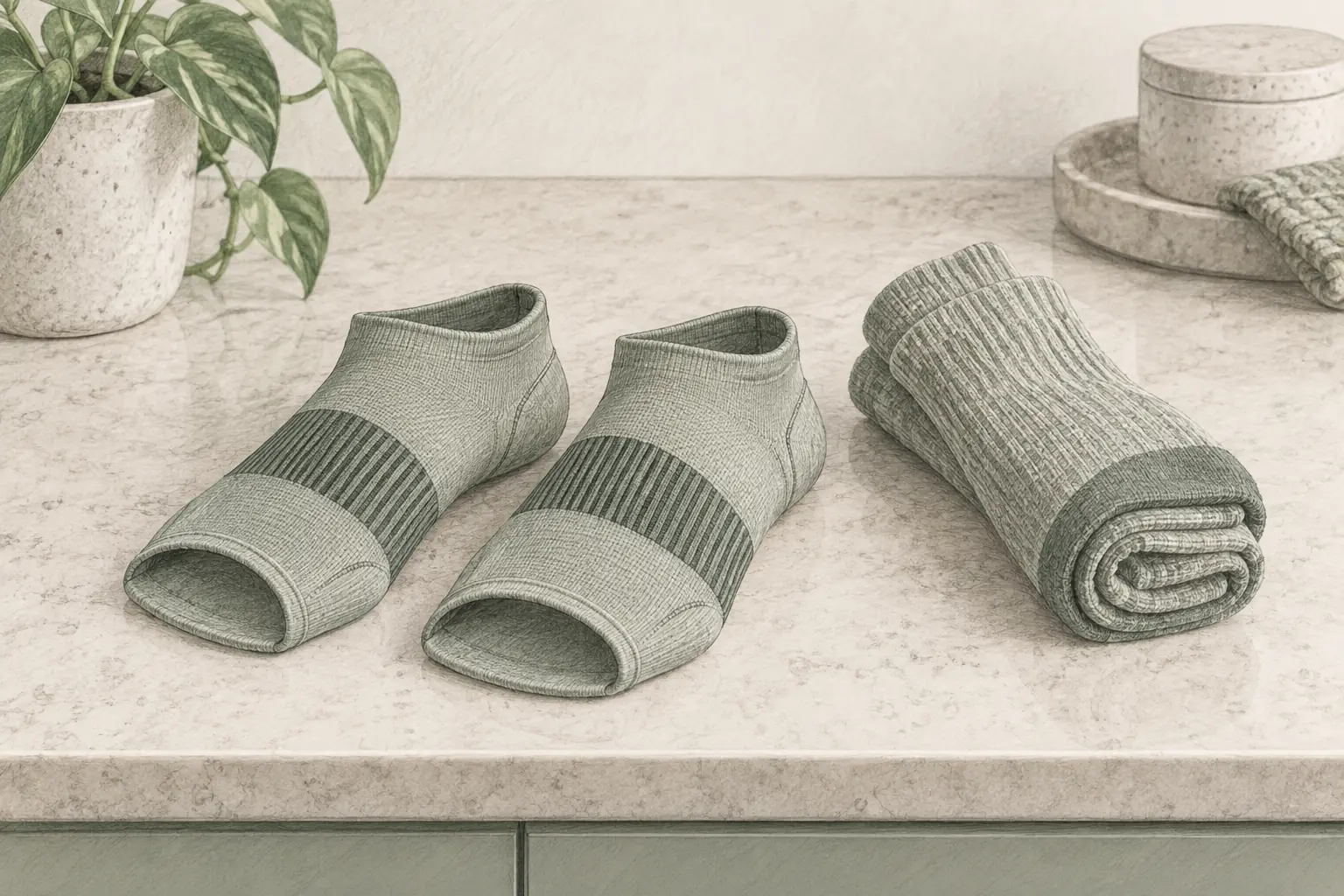
This is the best value in the lane because one order gives you six pairs of arch-support sleeves. They are built for plantar fasciitis comfort, with compression focused on the arch and heel rather than a tight squeeze up the whole leg.
The open-toe cut means you can wear them alone or under your usual socks, and they fit inside most shoes without feeling bulky. The sizing runs by shoe size across five bands, so most buyers can find a match.
Buy it if you want light support you can wear every day and wash in a normal load. Skip it if you need firm 20-30 mmHg compression or a sock that reaches the calf.
IRAMY Compression Ankle Support Crew Socks
This is the pick for people who are on their feet for hours. The crew height covers the ankle and lower calf, and the compression rings wrap the foot at several points rather than one tight band.
The fabric is the reason to choose it. CoolMax moves sweat away and the mesh keeps air moving, which matters on a shift or a long walk. The reinforced arch adds support right where plantar fasciitis bites.
Buy it if you want breathable crew socks for standing work, walking, or travel. Skip it if you prefer a hidden low-cut fit or you want firm medical compression.
BLITZU Compression Socks
This is the low-profile option. It wraps the arch and ankle with adjustable compression, which makes it easy to dial the support up on a bad day and down when the foot is calm.
It fits under most shoes without adding bulk, so it suits sneakers, work boots, and travel days. Buyers report it helps with swelling after time on their feet, and the sleeve style is easier to slip on than a tall sock.
Buy it if you want support that stays hidden and you like to adjust the tension yourself. Skip it if you want calf coverage or you need firm compression for swelling.
How to wear them for morning heel pain
Put a sock on before you stand up if mornings are the worst part. The arch support is doing the most good in those first steps, and having it on before your feet hit the floor is easier than trying to pull one on once the pain has started.
Wear the sock through the day rather than only at night. Daytime support takes load off the plantar fascia while you walk, and an overnight night splint handles the sleeping hours. Together they cover both halves of the problem.
Roll the arch before you get out of bed. A firm plantar fascia roller or a frozen bottle for 30 seconds loosens the tissue, and then the sock supports it through the morning.
What to check before you order
Measure your foot and use the brand's shoe-size chart. If the chart lists arch circumference, compare that number too, because a wide foot in a narrow sock will pinch. When you are between sizes, size up for a sock you plan to wear all day.
Check the compression level. Light to moderate, around 15-20 mmHg, is the all-day range for most people. Firm 20-30 mmHg socks are for swelling and recovery, and they take patience to pull on.
Look at the toe shape. Open-toe sleeves work under regular socks and are easy to check for fit. Closed-toe socks look and feel more like normal socks but can feel tight across the toes if you are between sizes.
Who should skip compression socks
Skip them if a clinician told you not to use compression. People with poor circulation, nerve damage, or diabetes should ask before wearing compression daily, because a tight sock can hide a problem.
You can also skip a dedicated plantar sock if your pain is mild. A well-cushioned shoe and a stretching routine may be enough. The sock becomes worth it when you are on your feet all day and the ache builds by afternoon.
If the heel pain is sharp, getting worse, or comes with numbness, get it checked. A sock is support, not a diagnosis.
Bottom line
Start with the PAPLUS Plantar Fasciitis Socks if you want light arch support for every day of the week. Choose IRAMY Compression Ankle Support Crew Socks for breathable crew coverage on standing days, or BLITZU Compression Socks if you want a low-cut sleeve that hides in your shoe.
Buying through the links on this page supports more guides like this at no extra cost. Browse the rest of the recovery accessories picks, or start with the blog for the full home recovery stack.
Frequently Asked Questions
What are the best compression socks for plantar fasciitis?
The PAPLUS Plantar Fasciitis Socks are the best pick for most people because the six-pair set gives you light arch support for a full work week. Choose the IRAMY Compression Ankle Support Crew Socks for breathable crew coverage, or the BLITZU Compression Socks if you want a low-cut sleeve that hides in a shoe.
Do compression socks help plantar fasciitis?
They support the arch and can ease the morning first-steps tightness that comes with plantar fasciitis. They are a comfort tool, not a cure. Pair them with stretching and the strength work a clinician gives you, and see a professional if heel pain keeps getting worse.
What compression level should I wear for plantar fasciitis?
Most everyday socks in this lane sit at a light to moderate squeeze, roughly 15-20 mmHg. A firm 20-30 mmHg sock is for travel, swelling, and recovery days, and it is harder to pull on. Start lighter for all-day wear and go firmer only if you need more support.
Should I wear compression socks at night?
Usually not the same sock you wore all day. Overnight plantar support is better handled by a night splint, which holds the foot at an angle while you sleep. A loose pair of compression socks is fine for some people, but a tight sock can be uncomfortable for eight hours.
How do I size compression socks for plantar fasciitis?
Measure your foot and check the brand chart by shoe size, then compare the arch circumference if the brand lists it. A sock that is too small pinches; one that is too loose slides and stops supporting the arch. When you are between sizes, size up for all-day socks.
Are compression socks or a night splint better for morning heel pain?
They do different jobs. A sock supports the arch through the day, and a night splint keeps a gentle stretch overnight. Many people use both, and add a plantar fascia roller before getting out of bed.
Can I wear compression socks all day?
Yes, as long as they stay comfortable. Take them off if you get numbness, tingling, color changes, or a mark that does not fade. People with circulation problems or diabetes should ask a clinician before wearing compression daily.
Do compression socks replace insoles or a brace?
No. A sock adds light support around the arch and ankle. Insoles and heel cups change how the foot lands inside the shoe, and a brace adds firmer structure. They can work together, but each one does a different part of the job.