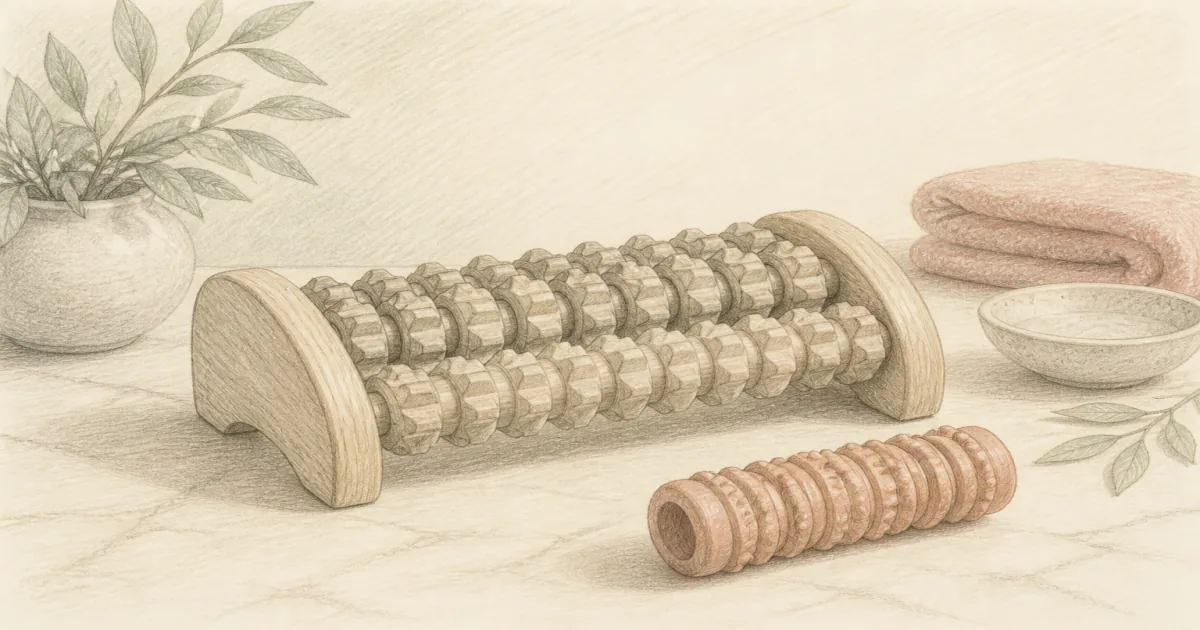
Best Plantar Fascia Roller (2026): Wooden vs Rubber Picks
Accessories
The best plantar fascia roller is a firm foot roller you will actually use under a desk or beside the bed. TheraFlow wooden rollers win for most people. THERABAND is the rubber pick when you want cold sessions.
Our picks
A plantar fascia roller is a small foot tool for arch and heel pressure. You sit, place the roller under the sole, and roll heel to toe with controlled weight. It is for daytime soft-tissue work after standing, walking, or training, not a diagnosis or treatment plan.
Browse more foot and lower-leg gear in recovery accessories. For overnight stretch instead of daytime rolling, start with best plantar fascia night splint. Broader recovery tools live on our massage gun pillar and the blog.
Quick comparison
If you only buy one tool and want classic plantar fascia roller pressure, start with the single TheraFlow. Upgrade to dual if you hate switching feet. Switch to THERABAND if wood feels too sharp or you want a chillable tube.
TheraFlow Foot Roller: best overall
The TheraFlow Foot Roller for Plantar Fasciitis Relief is the pick for most homes. Five rows mix ridged wood with reflexology-style nubs, so you can sweep the whole sole or pause on a stubborn arch spot. The non-slip base matters more than it sounds. A roller that walks across hardwood mid-pass becomes a balance problem fast.
Sit first. Roll slowly from heel toward the ball of the foot. Lean in only as far as pressure stays productive. If the wood feels brutal on day one, keep a sock on and shorten the session instead of forcing deep pressure.
Best for: people who want one durable wooden plantar fascia roller they will leave by a desk chair. Skip if: you need both feet rolling at the same time or you already know rubber feels better on your arches.
TheraFlow Dual: best for both feet
The TheraFlow Wooden Dual Foot Massager is the better buy when you want simultaneous work while watching TV or answering email. The wider wooden platform keeps both feet busy without constant switching. Pressure is still firm, so tender mornings may need lighter body weight and shorter passes.
It takes more floor space than the single roller. That is the tradeoff for dual-foot convenience. Keep it under a desk if that is where you sit longest.
Best for: desk workers and evening stretchers who want both feet covered. Skip if: you mainly travel or only have room for a palm-sized tube.
THERABAND Foot Roller: best rubber and cold option
The THERABAND Foot Roller is a ridged rubber tube with a different feel from dense wood. The surface flexes into the arch, which many people prefer for sensitive mornings. It is also the pick when you want the option to chill the roller for cooler sessions, following the product guidance.
It will not dig as hard as a wooden five-row board. If you specifically want aggressive wood pressure, stay with TheraFlow. Also skip THERABAND if you have a latex allergy.
Best for: softer contour, travel bags, and cool-down days. Skip if: you want maximum wooden ridge bite or latex is a problem.
How to use a plantar fascia roller without overdoing it
- Sit with the roller under one foot.
- Roll heel to toe for about one to three minutes.
- Pause briefly on tender arch spots without grinding.
- Switch feet.
- Stop if pain sharpens, goes numb, or flares the next morning.
Keep weight controlled. Standing and stomping on a small roller is how people make arches angrier, not looser. Two short daily sessions usually beat one long aggressive one.
Pair rolling with calf lengthening when lower-leg tightness feeds the arch. A calf stretcher covers that job. A muscle roller stick is better for standing soft-tissue work on calves, not the sole of the foot.
Roller vs night splint vs foot massager
Buy a roller when you want a cheap, no-power tool you can keep under a desk. Buy a night splint when first-step morning pain is the main complaint. Buy a foot massager when you want powered kneading instead of manual rolling.
Do not stack every tool in one sitting on day one. Pick the job that matches the complaint, then add a second tool only if the first habit sticks.
Who should buy something else
Buy a full-size foam roller when calves and quads are the real tightness, not the arch. Buy compression or brace gear when joint support while walking is the goal. Buy clinician care when pain is sharp, sudden, swollen, or not improving with basic home tools.
If your only issue is mild end-of-day foot fatigue and you already stretch well, a dedicated roller is optional. A frozen water bottle under the arch is a common temporary stand-in, but a real roller stays cleaner and more controlled for daily use.
The bottom line
Start with the TheraFlow Foot Roller for Plantar Fasciitis Relief unless you need the dual-foot TheraFlow Wooden Dual Foot Massager or prefer the rubber THERABAND Foot Roller. Keep sessions short, sit while you roll, and use a night splint separately when overnight stretch is the missing piece.
Frequently Asked Questions
What is the best plantar fascia roller for most people?
The TheraFlow Foot Roller for Plantar Fasciitis Relief is the best default. It is a firm wooden five-row roller with a stable base. Choose the TheraFlow Wooden Dual Foot Massager if you want both feet at once, or the THERABAND Foot Roller for rubber ridges and optional cold sessions.
Is a plantar fascia roller the same as a foam roller?
No. A plantar fascia roller is a small foot-specific tool for the arch and heel. A foam roller is larger and aimed at calves, quads, and back. Many people own both for different body areas.
How long should I roll my feet?
Keep early sessions short. One to three minutes per foot is enough. Stop if pressure turns sharp, numb, or worse the next morning. Gentle daily passes beat one aggressive session.
Should I roll barefoot or in socks?
Either works. Socks reduce friction and make firm wood feel less harsh. Barefoot gives more direct ridge contact. Start with socks if mornings feel tender.
Will a foot roller replace a night splint?
No. Daytime rolling and overnight stretch are different jobs. If morning first-step pain is the main complaint, also read best plantar fascia night splint.
Can I put a foot roller in the freezer?
Follow the product instructions. Rubber rollers like THERABAND are commonly chilled. Wooden rollers are not freezer tools. Never roll over broken skin or after a fresh injury without clinician guidance.
Who should skip a plantar fascia roller?
Skip it if a clinician told you to avoid loading the foot, if you have an open wound, suspected fracture, or severe neuropathy where you cannot feel pressure safely. Ask a clinician when you are unsure.