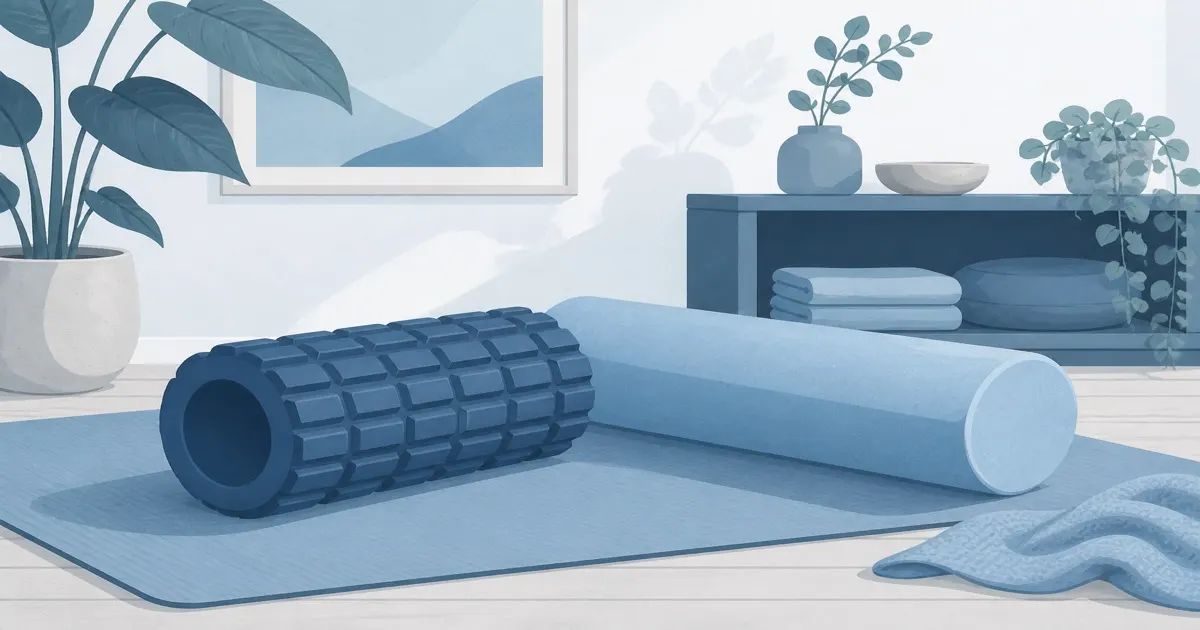
Best Foam Roller (2026): Textured vs Smooth Picks for Home Recovery
Accessories
The best foam roller is the one you will unroll after training instead of ignoring. Pick a textured Grid for most people, a medium-density 321 Strong for softer pressure, or a smooth Amazon Basics when you want firm and cheap.
Our picks
A foam roller only helps if you use it. Fancy texture means nothing if the roller lives in a closet. You usually need one tool that handles calves, quads, glutes, and upper back after workouts or desk days.
More small recovery tools live in our accessories category. For percussive relief without floor work, start with the best massage gun pillar guide. For motor-assisted rolling, see best vibrating foam roller. For standing full-body vibration after leg day, compare best vibration plate picks including the Merach CV40 when you need higher capacity.
Density matters more than brand slogans. Too soft and you feel nothing. Too hard and you quit after one session. Texture helps stubborn knots. Smooth rollers keep pressure even across a larger contact patch. A 13-inch roller travels and targets better. An 18-inch roller makes back and two-leg rolls easier at home. Two to five minutes per muscle group is enough. Slow passes beat frantic bouncing.
For standing limb work, see best muscle roller stick. If knee tightness after walks is the real complaint, a best knee massager wrap may feel more direct than another floor session. Desk-day neck tension may respond better to what is the best neck massager than rolling the front of your neck. Browse more on the blog.
Quick comparison
TriggerPoint Grid 1.0 Foam Roller (13-Inch)
This is the home default and the brand most people mean when they ask which foam roller is best. The multi-density Grid surface gives you flatter palm-like zones and sharper fingertip-like ridges on one cylinder. The hollow core stays firm after repeated sessions, which is why this shape stays popular with runners and gym regulars.
Buy this if you want one textured roller for most muscle groups. Skip it if you know you hate nodule pressure, or if you only want a long smooth back roller for yoga flows. The 13-inch length is less ideal for full-spine floor rolls. That is the travel tradeoff.
Start on larger muscle groups like quads and glutes. Use slower passes on calves. Keep your weight controlled so you are not slamming high points into bone.
321 Strong Foam Roller (Medium Density)
This is the medium-texture alternative. Three projection zones aim to mimic fingertips, thumbs, and palms, and the density is more approachable than extra-firm grids. Texture still digs if you crash onto high points. Treat the first week like a dial-in period. If high points feel sharp, shift to broader zones and lower body weight before you decide the roller is wrong for you.
Buy this if TriggerPoint feels too aggressive in demos, or if you want textured rolling without paying for the Grid badge. Skip it if you specifically want the TriggerPoint ecosystem and video library.
Amazon Basics High-Density Foam Roller (18-Inch, Black)
This is the budget smooth pick. You get firm polypropylene, an 18-inch length for back and legs, and no fancy texture. That is the point for people who want predictable pressure. High density can feel harsh on sensitive tissue. Reduce body weight and shorten sessions if you bruise easily.
Buy this if you want a cheap second roller, a longer body for floor work, or a first roller without texture anxiety. Skip it if stubborn IT-band or calf knots are the whole reason you are shopping.
Use it for controlled back rolls and broad quad passes. Pair it later with a textured 13-inch roller if you still need knot work.
Matching a roller to your week
Gym weeks need calves, hips, and quads with slow, controlled passes. Desk weeks need upper back and glutes more than max intensity. Travel weeks favor the shorter Grid or 321 Strong size over a long Basics roller.
Runners often keep the Grid in a gym bag and use the longer Basics at home for thoracic sweeps after long mileage weeks. If your main complaint is feet after standing shifts, a foot massager may help more than another floor roller. If you want hands-free mid-back coverage while you sit, a back massager cushion is the clearer tool. For active thoracic openers rather than soft-tissue rolling, see a yoga wheel. For colder recovery days, see best cold plunge.
How to use one safely at home
Roll slowly. Cover two to five minutes per area. Breathe. Stop on sharp, electrical, or numb sensations. Avoid rolling directly on the spine or the front of the neck.
More pressure is not automatically better. If you bruise easily, reduce body weight and shorten sessions. A short daily habit wins over one brutal Sunday roll that makes you skip the next five days.
Keep the roller where you change clothes or stretch. Out of sight usually means unused.
Care that keeps it usable
Wipe sweat off after sessions. Store it off wet garage floors. Hollow-core rollers hate getting crushed under heavy boxes.
If the foam mushrooms, cracks, or smells chemical-hot, replace it. A deformed roller changes pressure in ways that feel random and discourage use.
Bottom line
Choose the TriggerPoint Grid 1.0 Foam Roller (13-Inch) for most home buyers. Take the 321 Strong when you want medium textured pressure. Start with Amazon Basics if you want firm, smooth, and cheap with more length. The best foam roller is the one that stays on the floor where you will use it.
Frequently Asked Questions
What is the best foam roller for most people?
The TriggerPoint Grid 1.0 Foam Roller (13-Inch) is the safest default. Multi-density texture plus a hollow core covers most home recovery days without buying a vibrating unit.
Which brand of foam roller is considered the best?
TriggerPoint is the name most runners and gym regulars recognize for textured rollers that keep their shape. For value textured rolling, 321 Strong is the usual alternative. For cheap smooth length, Amazon Basics is the easy pick.
What type of foam roller is best for me?
Start textured if you want knot work on calves, quads, and glutes. Start smooth if you hate nodule pressure or mainly want long back passes. Start medium density if firm grids feel too sharp on day one.
Is a high density or medium density foam roller better?
Medium density is easier the first week and still digs when you lean in. High density gives more predictable firm pressure for bigger muscle groups. Sensitive tissue should start medium, then step up only if rolling feels too soft.
Are foam rollers really worth it?
Yes for most active people who skip stretching. Two to five minutes per muscle group after training or desk work is enough to feel less stiff. They are not a replacement for a massage gun or a massage chair, but they cost less and need no charging.
What is the best foam roller for lower back pain?
A longer smooth roller like the Amazon Basics High-Density Foam Roller (18-Inch, Black) is the safer pick for broad thoracic and upper-back sweeps. Keep weight off the spine itself. If pain is sharp or radiating, stop rolling and talk with a clinician.
What is the best foam roller for runners?
Runners usually want a 13-inch textured roller for calves and IT bands. The TriggerPoint Grid 1.0 is the default. Add the 321 Strong if firm texture feels too aggressive after long runs.
Should I buy textured or smooth?
Textured rollers dig into stubborn spots faster. Smooth rollers feel more predictable for full-back passes and first-time users who hate nodule pressure. Many people keep both.
Is a vibrating foam roller worth it?
Sometimes, if normal rolling feels too harsh or too easy to skip. Compare dedicated options in best vibrating foam roller. Start with a good static roller first if you have never rolled consistently.
Can a foam roller replace a massage gun or chair?
No. A roller is bodyweight pressure on the floor. A massage gun is targeted percussion. A massage chair is hands-free full-back recovery while you sit.