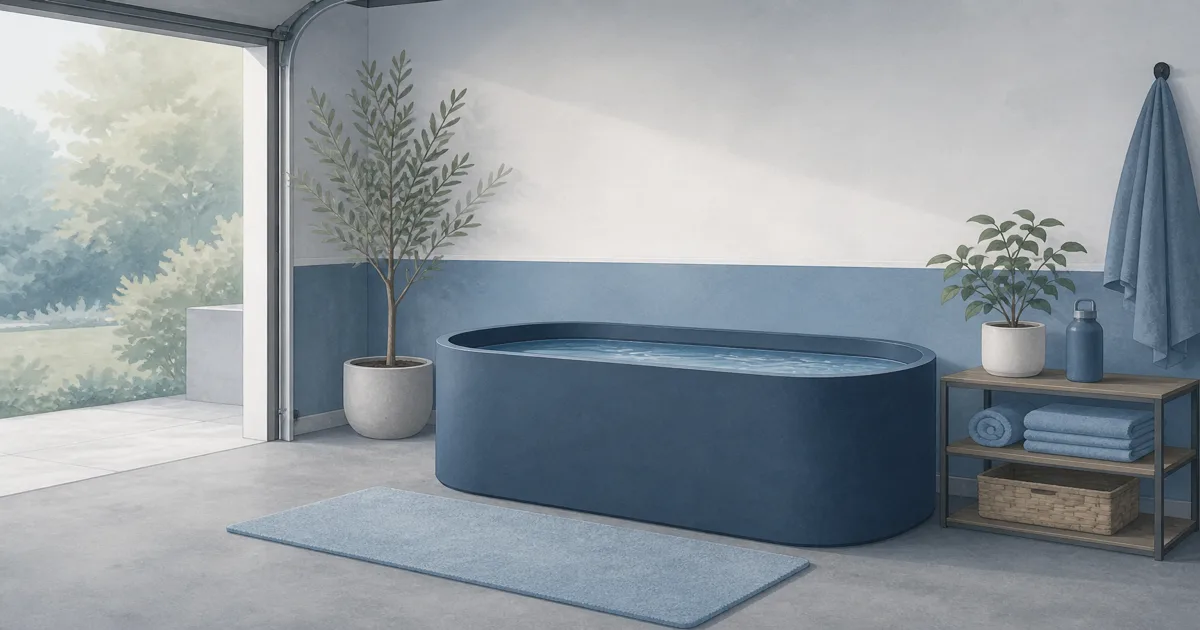
Best Cold Plunge (2026): Home Tub Picks That Stay Clean
Cold plunge
The best cold plunge for most homes is a sturdy insulated tub you can drain and cover. Start with ice and a 99-gallon tub, then add a chiller only if the habit sticks.
Our picks
A cold plunge looks simple until the tub is in the garage and the water turns cloudy. You need a level surface, a splash zone, a drain path, and a lid that stays put. Ice is honest work. A chiller is convenient, noisy, and electrical. This guide covers the three tubs we would buy first, what a session actually costs in ice or electricity, and when the math flips in favor of a chiller.
More cold plunge guides live in that collection. Heat recovery is a different job, so pair this with best infrared sauna only after both footprints fit. When ice runs get old, compare a dedicated cold plunge chiller before you keep buying bags. A cold plunge cover and a spare drain pump are the two add-ons that keep the routine alive.
Which cold plunge is best for most homes?
The Plunge Magic XXL is the best cold plunge for most homes because 216 gallons gives adults room to sit upright, the lid keeps debris out, and the ports accept a chiller later. Buy the 99-gallon BINYUAN if floor space is tight.
Plunge Magic XXL: the roomy 216-gallon tub
The Plunge Magic XXL Inflatable Cold Plunge Tub (216 Gal) is the cleanest answer for anyone who wants a real sit-in ice bath at home. The oval fits taller adults, the insulated lid slows heat gain between sessions, and the inflate kit means setup is an afternoon job rather than a plumbing project.
Confirm the spot can hold roughly 1,800 pounds of water plus the tub, and that a hose reaches it. Keep the cover on between sessions so leaves and dust stay out. If you start ice-only, buy ice the night before so the routine does not stall.
Who it is for: garage and patio athletes, first plunge setups, and anyone who wants room to sit without feeling folded in half.
BINYUAN 99 Gal: the compact covered tub
The BINYUAN XL Ice Bath Tub with Cover (99 Gal) is the better buy when floor space is tight and you mostly plunge alone. The cover helps between sessions, and the smaller water volume is easier to chill with ice and change than a full XXL oval. The tub runs from -86°F to 140°F, so it doubles as a hot soak if you want one.
Expect less sprawl than the Plunge Magic XXL. Measure the footprint with painter's tape before you order, and keep a non-slip mat outside the rim so wet exits feel safer. The maker's own guidance is a weekly water change, which is the honest rhythm for a tub with no filter.
Who it is for: solo recovery corners, apartments with a covered outdoor spot, and buyers who want a smaller water volume to change.
Ice Pod Pro: the insulated 110-gallon tub
The Ice Pod Company Ice Pod Pro is the middle lane: bigger than a 99-gallon drum, easier to live with than a 216-gallon oval, and designed to pair with a chiller through the same fittings. The lid clamps down, which matters more than most people expect in a garage with leaves and dust.
Who it is for: buyers who want a known brand, a slightly longer tub, and a clear upgrade path to a chiller.
How much ice does a home cold plunge actually need?
Plan on about 150 pounds of ice for a 99-gallon tub and about 334 pounds for a 216-gallon tub, assuming a 30°F pull-down from 80°F to 50°F. Ambient temperature and tub insulation decide how much more you burn.
The 99-gallon math
Water weighs 8.34 pounds per gallon, so 99 gallons is about 826 pounds of water. Dropping that 30°F takes roughly 24,780 BTU. One pound of ice absorbs about 162 BTU once you count melting plus warming the meltwater to 50°F. That is about 153 pounds of ice, or 15 ten-pound bags, per session. At $2.50 a bag that is about $38.
The 216-gallon math
Double the water and the ice bill doubles and then some: 1,801 pounds of water, 54,030 BTU, and about 334 pounds of ice. Hauling 33 bags into a garage every time you want a plunge is the point where most people stop. This is the honest argument for a chiller on a big tub.
When a chiller pays for itself
A 1/3 HP chiller draws about 280 watts. Once the water is at setpoint it cycles roughly 20 to 30 minutes per hour, which works out to about 2.2 to 3.4 kWh a day, or $0.38 to $0.58 at $0.17 per kWh. Compare that with $38 a session in bagged ice and the break-even is a matter of weeks for a daily plunger, not years.
What does each tub cost to run and maintain?
Chiller cost assumes a 1/3 HP unit at 280 watts cycling 20 to 30 minutes per hour, at $0.17 per kWh. Ice cost assumes $2.50 per ten-pound bag.
How do you keep the water clean without a filter?
Change the water weekly, cover the tub between sessions, and rinse the liner with mild soap before refills. Once you add filtration and a sanitizer routine, the interval stretches to two to four weeks.
The weekly change
An unfiltered tub is a bucket of standing water. BINYUAN's guidance for the 99-gallon model is a weekly replacement, and that is the right baseline for any tub without a filter. Write the change date on the lid so you are not relying on memory.
Covers, debris, and freeze risk
A cover keeps leaves, dust, and rain out, which is most of what turns water cloudy early. In freezing weather, an outdoor tub needs draining or a freeze plan, and a chiller needs either an insulated cover or a winter drain. A tub that cracks over winter costs more than the ice you saved.
Filtration and the two to four week interval
Add a circulation pump and a filter cartridge and the water stays clear longer. Budget $10 to $20 a month for filters and water treatment, then change the water every two to four weeks depending on how many people use it.
Quick comparison
Who should skip a cold plunge?
Skip a home cold plunge if you have no level outdoor or garage space, no drain path, or a clinician has told you to avoid cold immersion. Skip the big tub if you are not ready to move 300 pounds of ice.
A tub you dread filling is a tub you stop using. If the plan is two plunges a week in summer only, a 99-gallon covered tub and a couple of bags of ice will do everything the XXL does. If the plan is daily, price the chiller into month one instead of buying it after a summer of ice runs. If you want heat instead of cold, the cold therapy machine guide covers a different job entirely.
Bottom line
The best cold plunge is the tub you can keep clean and cold without dreading the chores. Start with the Plunge Magic XXL for space, the BINYUAN 99 Gal for a tight solo corner, or the Ice Pod Pro if you want insulation and a known brand. Then decide between ice and a chiller with the numbers above rather than a guess. More recovery gear lives on the Recoverypicks blog and the homepage.
Frequently Asked Questions
What is the best cold plunge for beginners?
Start with a stable insulated tub you can enter, drain, and cover. The Plunge Magic XXL is the roomiest default here. You do not need a chiller in week one if cold tap water and ice already get you where you want to be.
Do I need a chiller for a home cold plunge?
Only if you want steady cold without hauling ice, and you accept the cost, noise, and power draw. Tub-only setups are simpler when you can refresh water and add ice as needed. A 1/3 HP chiller runs about $0.38 to $0.58 a day in electricity.
How much ice does a 99-gallon cold plunge need?
Roughly 150 pounds of ice to drop 99 gallons from about 80°F to 50°F. That is about 15 ten-pound bags, or around $38 at typical bagged-ice prices. Most people use less ice and accept warmer water.
How cold should a cold plunge be?
Many home users settle in the mid-40s to mid-50s °F once they adapt. Beginners can start warmer and shorter. Stop if you feel unsafe. This is not medical advice.
How often do I change the water?
Plan on weekly changes for an unfiltered tub, and every two to four weeks once you add filtration and a sanitizer routine. BINYUAN's own guidance for the 99-gallon tub is a weekly replacement. Keep a simple log so you are not guessing.
Where should I put a cold plunge at home?
Garages, covered patios, and dedicated recovery corners are common. You need a level surface, a splash zone, a drain path, and an outlet if you add a chiller. A filled 99-gallon tub weighs about 826 pounds before the tub itself.
Is an inflatable cold plunge worth it versus a hard tub?
Inflatable tubs win when you want a lower upfront cost and easier storage. Hard shells feel more permanent and hold temperature longer. Buy inflatable if you are still proving the habit, then upgrade the chiller before you upgrade the tub.
How long does it take to drain a cold plunge?
A 99-gallon tub with a garden-hose drain valve empties in about 20 minutes at a typical 5 gallons per minute. The last gallon or two needs a slight tilt. Aim the hose downhill, away from the foundation.
Cold plunge or a portable ice bath bag?
A freestanding tub is easier for regular sessions. A portable ice bath works for travel or tiny spaces, but it is less comfortable for daily home use.