Best Cold Therapy Machine (2026): Circulating Ice Systems for Home
Cold plunge
The best cold therapy machine keeps cold water moving through a wrap so you are not babysitting melting ice packs. Start with a knee kit if that is your joint, then decide if you want a quieter pump or a cheaper universal pad.
Our picks
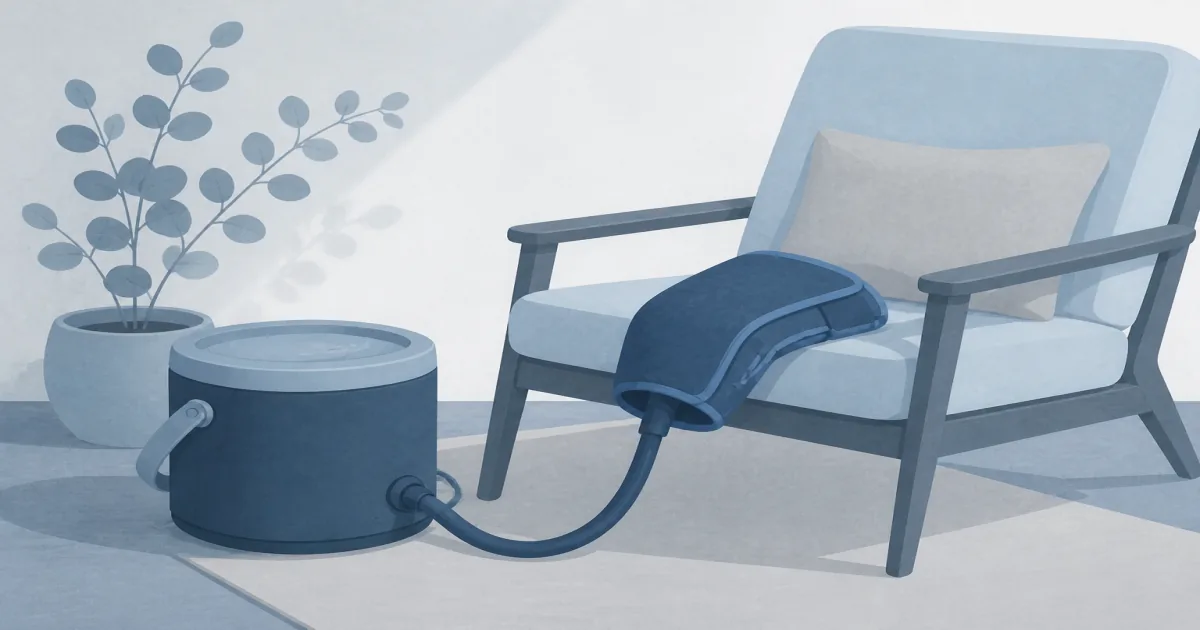
A cold therapy machine is a small cooler with a pump and a wrap. Cold water moves through the pad so one joint stays cold without you standing at the freezer every ten minutes. That is the whole job.
The best cold therapy machine for most people is the Polar Active Ice 3.0 Knee & Joint, because the timer lets you set on and off cycles and the 9-quart reservoir holds enough frozen bottles to last a night. The Ossur Cold Rush is the quiet bedroom pick, and the NEHOO is the value option with a universal pad.
It is not a plunge tub, and it will not erase pain. It is a practical way to keep cold on a knee, shoulder, or ankle while you sit still. Buy one if you already know you will use cold several times a day. Skip it if a gel pack already covers your evenings.
If you want full-body cold instead, start with best cold plunge. If you only need occasional spot cooling, stay with best ice pack. More recovery gear lives on the blog. For the rest of the cold gear, start with the cold plunge guide.
Is a cold therapy machine worth it, or is a gel pack enough?
A gel pack is enough for short evening swelling or a mild sprain. It stops being enough when you need cold for longer than the pack holds, several times a day, on the same joint. That is when a circulating machine is the better tool.
Here is the simple test. If you are swapping gel packs more than twice in a sitting, or if you cannot leave the pack on without holding it, a machine is the better tool. If cold is a ten-minute habit once a night, keep the pack.
The machine is also more consistent. A pad that stays wrapped at a steady temperature is easier to repeat than a pack that warms in fifteen minutes and slides off your shin.
Which machine should you buy?
Buy the Polar if you want the strongest default for home knee recovery with a timer you can trust and a long-lasting reservoir. Buy the Ossur if noise is the deal-breaker and you like simple continuous cooling. Buy the NEHOO if budget and multi-joint flexibility matter more than a clinic brand name.
All three need ice or frozen bottles. None of them makes cold by itself. The differences that matter are reservoir size, whether there is a timer, how loud the pump is, and which pads are in the box.
How long does the cooling actually last?
On the 9-quart Polar, many owners report 6 to 8 hours of cooling, which is a full night on one fill. The Ossur holds up to 6-plus hours on its ice-to-water ratio, and the NEHOO follows its reservoir size. Frozen bottles stretch all of them further.
Runtime depends on body heat, the flow setting, and the cycle length. Higher flow feels colder and melts the bottles faster. On the Polar, the default cycle is 10 minutes on and 10 minutes off, which is both a comfort setting and a way to make the cold last.
Should you use ice or frozen bottles?
Use frozen 500 ml water bottles when you can. They last longer than loose ice, and you never drain meltwater. You pull the bottles, refreeze them, and the next fill is ready.
The 9-quart Polar holds up to six frozen bottles. The method is the same in all three machines: bottles first, then water to the fill line below the return tube. If you use loose ice instead, fill to the top and expect to top it off sooner.
How long should a session last?
For general home use, 15 to 30 minutes is the common range, then give the skin a break. On the Polar, the timer takes the guesswork out, so set a shorter cycle and extend it only if the skin stays comfortable.
Always put a thin barrier, like a t-shirt or a light elastic bandage, between the pad and bare skin. Start shorter if cold feels sharp. Stop for numbness or burning, and follow a clinician's plan if you have one.
Polar Active Ice 3.0 Knee & Joint
This is the balanced home system. The programmable timer lets you set on and off cycles so the pad does not run forever while you nap. The 9-quart reservoir holds ice or frozen water bottles long enough for real sessions. The knee and joint pad uses elastic belts that stay put better than a floppy gel pack sliding down your shin.
Buy this if your main target is a knee or a similar joint and you want clear session control. Skip it if you need a huge back pad or you refuse to spend mid-tier money on recovery gear.
Ossur Cold Rush with Knee Pad
This is the quiet clinic-style pick. The brushless pump is built for low noise, which matters when you are stuck on the couch after surgery and every buzz feels loud. Extra pads for other body parts exist if your recovery moves around.
Buy this if quiet nights matter more than a timer menu. Skip it if you want the Polar's programmable cycling out of the box, or if you need one pad that covers shoulder and ankle without buying extras.
Ossur units on Amazon often ship from medical sellers, so confirm the knee pad is in the box photo and description before you click. The unit itself is the familiar Cold Rush style many clinics already use, and extra pads are sold separately.
NEHOO Cold Therapy Ice Machine
This is the value programmable kit. You get cycle controls, flow adjustment, and a universal pad with four straps that can move from knee to shoulder to ankle. The quieter brushless pump improves on old homemade cooler setups. The price lands well under the Polar and Ossur kits.
Buy this if you want one machine that can follow different joints through a season. Skip it if you want the most secure dedicated knee cuff, or if you prefer a clinic brand name for peace of mind.
Tighten universal straps evenly, and use a thin cloth barrier if the pad feels too direct on skin. If the pad feels loose on a swollen knee, a joint-specific cuff is the better fit.
Cold therapy machine specs compared
How much does a cold therapy machine cost per session?
Divide the price across the sessions in one recovery, not across the years. A knee recovery often runs two sessions a day for about six weeks, which is around 100 sessions. At that count, all three machines cost a few dollars a session, far less than a clinic visit.
The electricity is trivial. A 12-volt pump draws about 1.5 amps, so a full night of cycling costs a few cents. The purchase price is the number that matters, and the reservoir size is what keeps you from refilling it at 3 a.m.
How do you set one up and care for it?
Fill the reservoir with frozen bottles or ice, then water to the fill line. Connect the pad with the quick-disconnect couplings, and let the system run a minute so the pad fills evenly before you strap it on. Always confirm water is returning to the reservoir.
Keep the cooler on a stable floor, not a soft mattress edge, so a bump does not tip it. Empty the meltwater when a session ends so the next fill starts cold instead of lukewarm. Wipe the pad dry and leave the lid cracked so the cooler does not smell stagnant.
Check the hose connectors for drips before you park the unit next to bedding, and store the spare straps with the machine so you are not hunting for them mid-recovery.
When is a cold therapy machine the wrong choice?
Skip it if you want full-body immersion. That path is a tub, covered in best cold plunge, with chiller notes once the habit sticks.
Skip it if a simple ice pack already covers your evenings. A machine is for repeated, hands-free, same-joint cooling, not for a one-off tweak.
If you have circulation problems, reduced sensation, or a healing wound, talk with a clinician before you use cold at home. Cold is a recovery aid, not a diagnosis.
Bottom line
Pick the Polar Active Ice 3.0 Knee & Joint system if you want the best everyday cold therapy machine for home. Choose Ossur Cold Rush when quiet continuous cooling is the priority, or NEHOO when you want programmable value with a universal pad. Match the pad to the joint you will actually wrap, and keep gel packs for the light days.
Buying through the links on this page supports more guides like this at no extra cost. Browse the rest of the cold plunge picks, or start with the blog for the full home recovery stack.
Frequently Asked Questions
What is the best cold therapy machine for most people?
The Polar Active Ice 3.0 Knee & Joint system is the safest default. The timer, 9-quart reservoir, and joint pad cover the use case most buyers actually have after knee work or hard training.
Is a cold therapy machine the same as a cold plunge?
No. A cold therapy machine circulates cold water through a wrap on one joint or body area. A cold plunge is a full-body tub. A plunge chiller cools tub water, not a pad.
Do I still need ice?
Yes for these systems. You fill the reservoir with ice and water, or with frozen water bottles, so the pump has cold water to move. Frozen bottles last longer and save you draining meltwater.
How long should a session last?
Follow your clinician's plan if you have one. For general home use, many people run 15 to 30 minutes, then give the skin a break. Start shorter if cold feels sharp.
Can I use one after ACL or knee replacement?
Many people do under clinician guidance. Match pad fit to the joint, keep a thin barrier if skin is sensitive, and stop if numbness or burning starts. This is not medical advice.
When is a simple ice pack enough?
Short evening swelling or a mild sprain often only needs a reusable ice pack. Buy a circulating machine when you need longer, hands-free cooling several times a day.
How long does the cold last before I refill?
On the 9-quart Polar, many owners report 6 to 8 hours of cooling, so a full night is one fill. Frozen 500 ml bottles last longer than loose ice.