Cold Plunge Chiller (2026): Dedicated Kit Setup Without Ice Hauling
Cold plunge
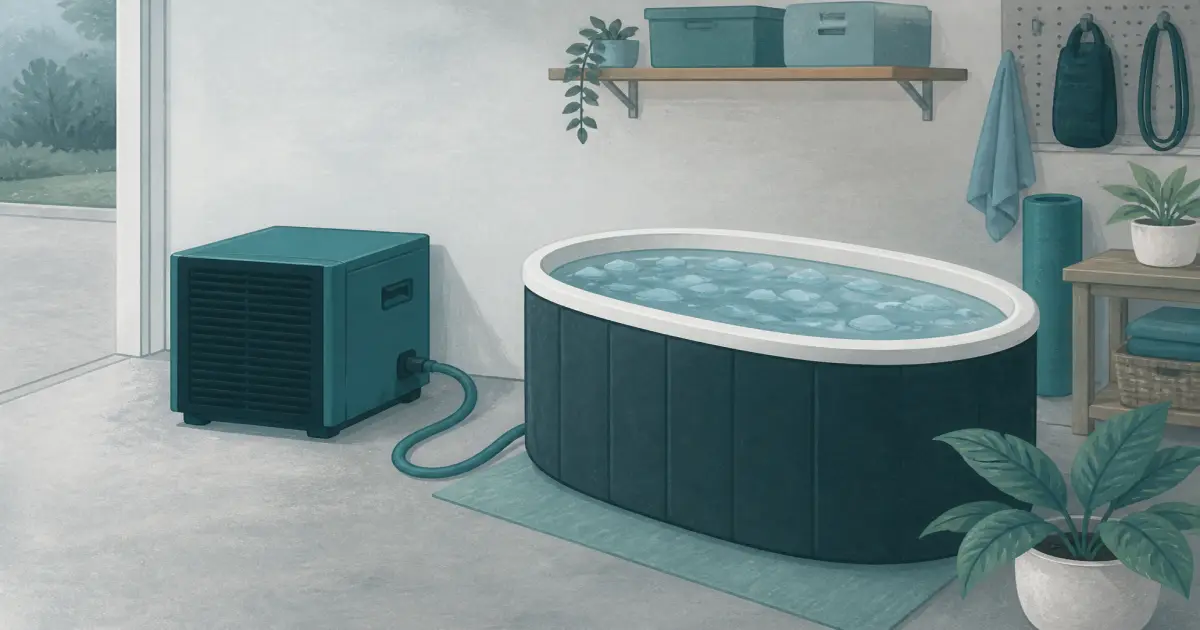
A cold plunge chiller holds tub water cold without hauling ice. The AS ColdPlunge 1/3HP kit is the dedicated pick for smaller home tubs when habit is already real.
Our picks
Ice is honest. A chiller is convenient, noisy, and electrical. Buy one when you already have, or are about to buy, an insulated tub, and weekly plunges make ice feel like a second job. Chillers dump heat through a fan. Expect compressor noise. A sealed closet makes them inefficient and loud.
More cold-plunge gear lives in our cold plunge category. Start with best cold plunge if you do not have a tub yet. Heat on the other end of the week lives in best infrared sauna.
Dedicated kit vs ice-only vs DIY cooler
If you want one order that behaves like a plunge accessory, take the AS ColdPlunge kit. If the habit is still a maybe, stay on ice. DIY hydroponic chillers can work, but you own the plumbing and sanitation plan yourself.
Do you even need a chiller yet?
A tub plus ice is enough to test whether you will plunge three times a week. Chillers add cost, a circuit, fan noise, and filter changes. That only pays off when ice runs and water swaps are the thing you dread.
Hot garages fight small chillers. Insulation, a lid, and shade do more than buying horsepower you will not place correctly.
If the tub is still a maybe, stay on ice. Buy the chiller after the habit survives a month.
AS ColdPlunge 1/3HP Cold Plunge Chiller
This is the dedicated pick. The AS ColdPlunge chiller is sold as a plunge and ice-bath unit, not a grow-tent leftover. It cools water down to roughly 42°F, and the LED touchscreen lets you set and hold a target temperature. A built-in circulation pump and a reusable metal mesh filter are part of the kit, so you are not hunting for a separate pump and disposable cartridges.
Buy this if you want included insulated hoses, quick-connect fittings, and a submersible pump that lets you use it with a plain bathtub as well as a plunge tub. Skip it if your tub is a huge XXL oval in a hot shop and you already know 1/3 HP will lose that fight.
Confirm the 1/2-inch NPT fittings against your tub. Adapters exist. Guessing does not.
Thermometer: the cheap setup check
The Leisurely Polar Bear Floating Ice Bath Thermometer is not glamorous. It is how you stop arguing with your ankles. Float it, read it, then decide whether to go colder. Pair it with any chiller or ice-only tub.
A dedicated cold plunge thermometer guide covers more gauge styles if you want a deeper dive.
Space, power, and noise
Chillers dump heat. Give the vents room. A sealed closet makes them inefficient and loud.
Check the outlet. Many compact chillers want a dedicated 120V circuit, not a daisy-chained power strip. Keep cords out of the splash zone.
Expect fan and compressor noise. If the tub sits next to a bedroom wall, that matters more than a 2 °F marketing gap.
Water care still exists
A chiller does not make tub water magically clean. Filters clog. Ozone helps some kits. You still need a drain-and-wipe plan, especially with no-filter inflatables.
Change water on a schedule you will keep. Log it. Murky water is how plunges get abandoned.
Matching chiller to tub
Smaller insulated tubs pair more reasonably with a 1/3 to 0.5 HP chiller. Large ovals hold a lot of water. Those setups often need more cooling capacity or excellent insulation and lid discipline.
If you are still choosing a tub, compare footprints in best cold plunge before you lock a chiller. Buying the cooler first is how people end up with fittings that match nothing.
First week with a new chiller
Prime the loop the way the manual says, not the way a comment section says. Watch for leaks at every barb and clamp before you walk away. Listen for a pump that is cavitating instead of pushing water.
Set a conservative temperature the first nights. You can go colder later. You cannot un-strain a compressor you ran against a warm, uninsulated tub with the lid off.
Keep a spare filter if the kit uses one. Clogged filters make people think the chiller is weak. See cold plunge filter replacement when it is time.
Bottom line
Skip a cold plunge chiller until the ice habit is real. Then choose the AS ColdPlunge 1/3HP Cold Plunge Chiller for a dedicated kit, and keep a floating thermometer in the tub so you know the number. Keep airflow around the unit, match fittings, and treat water care as part of the purchase. More guides sit on the Recoverypicks blog and homepage.
Frequently Asked Questions
Do I need a cold plunge chiller?
Only if you use the tub often enough that ice and tap water feel like a chore. A cold plunge tub plus ice is enough for a trial habit.
What size chiller do I need?
Match horsepower to gallons and room temperature. A 1/3 to 0.5 HP unit is a common start for smaller home tubs. Giant ovals in hot garages often want more capacity.
Can I use a hydroponic chiller on a plunge?
Some people do, but you still need a pump, hoses, fittings, and a water-care plan. A dedicated plunge kit is less of a science project.
How cold should the water be?
Many home users land in the mid-40s to mid-50s °F after they adapt. Beginners can start warmer and shorter. Stop if you feel unsafe. If you have heart, circulation, or cold-exposure questions, talk to a clinician first.
Where should the chiller sit?
On a level, splash-aware surface with airflow around the vents. Garages and covered patios are common. Do not bury it in a sealed closet.
What else do I need with a chiller?
A thermometer helps you stop guessing. Filters still need changing. See cold plunge filter replacement once the loop is running.
Should I buy the chiller before the tub?
Usually no. Lock the tub footprint and fittings first in best cold plunge, then match the cooler.