Best Foam Roller for IT Band (2026): What Actually Helps the Outer Knee
Accessories
IT band pain shows up on the outside of the knee, but the band is not the thing you should be grinding on. Here is the roller and kit setup that reaches the TFL, glutes, and outer quad, plus how to roll without making it worse.
Our picks
The best foam roller for IT band pain is not the hardest cylinder on the shelf. It is the tool that lets you work the muscles pulling on the band, because the band itself is not the thing that tightens up the way people assume.
IT band pain usually shows up as a sharp ache on the outside of the knee, often after a predictable distance. The band is a tough strip of connective tissue running from the hip to below the knee, and rolling straight into it is a common mistake. The muscles doing the pulling sit higher up, at the TFL and the glutes.
If you are new to rolling in general, start with our best foam roller guide and the other recovery accessories. This page is narrower: it is about the outer-knee job and the two tools that do it well. For percussion instead of floor work, the massage gun guide is the pillar read.
Quick comparison
Krightlink 5-in-1 Foam Roller Set
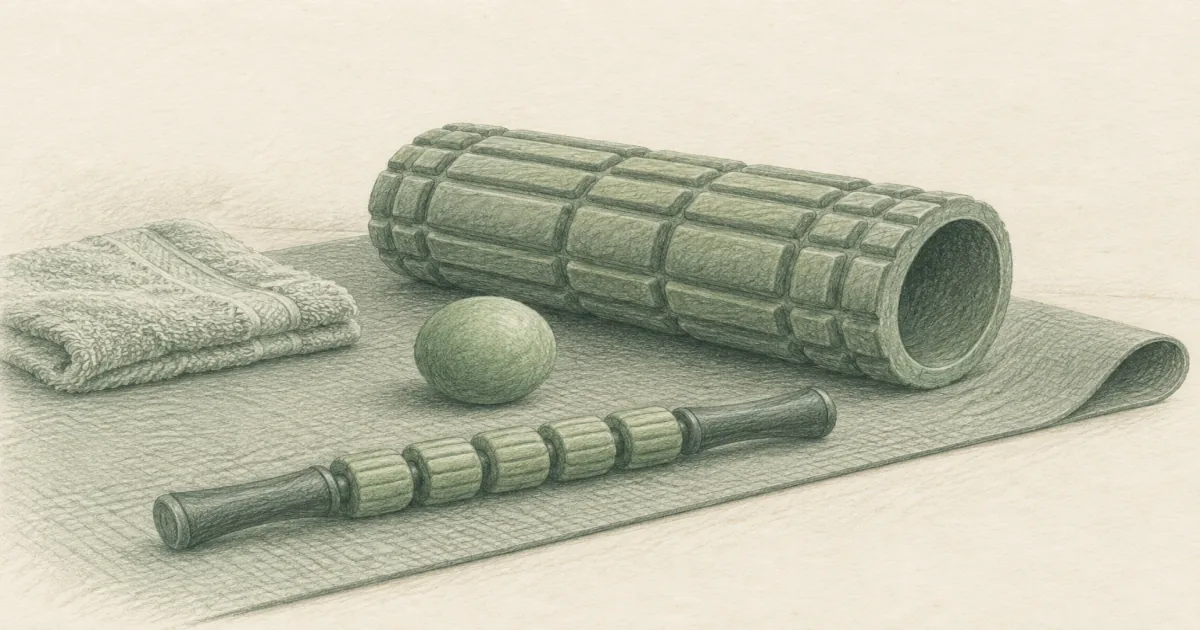
This is the setup pick because it covers the whole job. The roller handles broad passes on the quad and calf. The massage ball pins down trigger points in the TFL and glutes, which is where a lot of outer-knee tightness starts. The stick gives you a way to work the thigh while standing, which matters if getting down on the floor is a project.
Buy this if you want one box that covers rolling plus targeted work. Skip it if you already own a textured roller and only need a ball, or if you want maximum firmness from a single cylinder.
The set also travels well because everything fits in the mesh bag. When we checked, it was listed about 10 percent below list, which is a reasonable time to add it to a gym bag.
Amazon Basics High-Density Foam Roller (12-Inch)
This is the budget pick. It gives you the density that self-massage guides recommend for real pressure, with molded edges that are a little kinder to the side of the leg. Twelve inches is the travel-friendly length, sized for calves, quads, and the outer thigh rather than for lying along the spine.
Buy this if you want one firm roller for the price of lunch and do not need texture. Skip it if you are brand new to rolling, unless you plan to start gently and work up.
Use it for slow passes from just below the hip to just above the knee. That is the line most runners feel after a long downhill day, and it is where a firm smooth roller beats a soft one.
A short routine that matches the problem
Roll the outer thigh and quad first, then the glutes, then spend the most time on the TFL. Two to five slow minutes per area is enough. Breathe, and keep the passes controlled rather than fast.
After rolling, stretch the hip and do a few glute and core exercises. Rolling loosens what you can reach. Strengthening is what keeps the outer knee quiet on the next run.
If the outer knee still flares at the same distance every time, back off mileage for a week and work the hip side harder. That pattern, not more pressure on the band, is what usually calms it down.
What not to do
Do not grind straight into the band itself for minutes at a time. It is not a muscle, it does not stretch the way people imagine, and irritating it can make the outer knee worse.
Do not chase the pain. If you find yourself holding your breath or bracing through a pass, you are pressing too hard. Light pressure with more repetitions beats one brutal session that makes you skip the next four days.
Do not roll a hot, swollen, or bruised knee. Cold and rest belong there first, and a clinician should look at anything that is getting worse.
When to see someone
Most outer-knee irritation from running responds to rolling, strengthening, and a slower build. See a clinician if the pain is sharp enough to change how you walk, if it comes with swelling or locking, or if it keeps returning after a few weeks of consistent work.
If your knee pain is more front-of-knee than outside, that is a different problem. A patella strap or a knee compression sleeve targets the front of the joint, while this page stays on the outer side. For calf tightness that feeds the same chain, a muscle roller stick works the lower leg while you stand.
Bottom line
Take the Krightlink 5-in-1 Foam Roller Set if you want the ball and stick that make IT band work actually useful. Add the Amazon Basics High-Density Foam Roller (12-Inch) if you want one firm, cheap roller for the outer thigh. Roll the muscles around the band, keep the pressure honest, and pair it with strengthening so the outer knee stops flaring at the same mile.
Frequently Asked Questions
What is the best foam roller for IT band pain?
The Krightlink 5-in-1 Foam Roller Set is the best starting point, because the ball and stick let you work the TFL and glutes that pull on the band. Add the Amazon Basics High-Density Foam Roller (12-Inch) for firm pressure along the outer quad.
Can foam rolling help IT band syndrome?
Rolling the muscles around the band, not the band itself, is the usual approach. It can ease tightness in the hip and outer thigh that feeds the irritation. It works best alongside strengthening, and it will not fix the cause on its own.
Should I roll directly on my IT band?
For most people, no. The band is tough connective tissue and grinding straight into it often irritates the outer knee more than it helps. Roll the TFL at the front of the hip, the glutes, and the outer quad instead.
How long should I foam roll my IT band?
Two to five slow minutes per area is plenty. Short, regular sessions beat one long painful one. Start light, warm the muscle up first, and add pressure only after the tissue feels ready.
Firm or soft roller for IT band work?
Medium to firm for the outer thigh, and something gentler for the first week if you bruise easily. A firm roller gives more predictable pressure, but too firm on day one is how people quit rolling.
Where is the TFL and how do I roll it?
The TFL sits at the front of the hip, just below and slightly outside the hip bone. Lie on the ball or roller with it under that spot, keep the pressure moderate, and work in small passes rather than long sweeps.
How fast can foam rolling fix IT band pain?
It is not a quick fix. Most runners notice less tightness in a week or two of consistent work, and it usually takes pairing rolling with strengthening and a slower build in mileage. Sharp outer-knee pain that keeps returning deserves a clinician's look.
When should I skip foam rolling?
Skip it if rolling makes the outer knee sharper, if the area is swollen and hot, or if you have numbness or tingling down the leg. For knee pain that is more front-of-knee than outside, a patella strap targets a different problem.