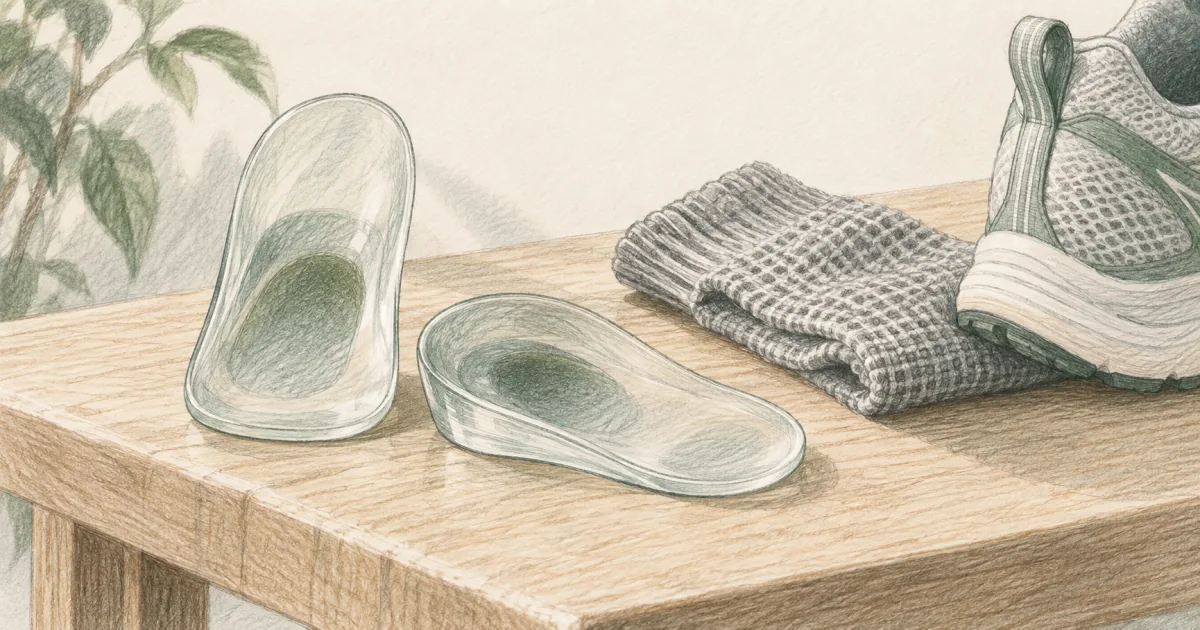
Best Heel Cups for Heel Pain (2026): Gel Cups That Stay In Your Shoes
Accessories
A heel cup is the cheapest thing you can put under a sore heel, and the wrong one slides out by lunchtime. These three stay put, and one of them works without shoes at all.
Our picks
The best heel cups for heel pain are the Tuli's Heavy Duty Heel Cups when you want the deepest, most protective cup the brand makes, with the Tuli's So Soft Heel Cups as the gentler version and the Welnove Gel Heel Protector Cups for wear without shoes.
Heel pain in the morning has a boring explanation. The plantar fascia tightens overnight, then you stand up and load it cold. A heel cup does not stretch anything. It puts a shaped cushion under the heel pad so that cold first step and the rest of the day land on something with some give.
That is the whole trick, and it is why heel cups are the cheapest first thing to try. They cost less than a pair of shoes and take up almost no room in one.
If you want the bigger picture first, the recovery accessories lane starts with the massage gun picks for the rest of your kit. For heel pain specifically, our plantar fascia night splint guide covers the overnight half of the problem and the foot massager guide covers what to do after a long day. This page is about the small cup you leave in your shoes.
What heel cups actually do
A heel cup is a shaped insert that sits under the heel and cups up around the sides of it. Two things happen when you stand in one. The heel pad gets some of its thickness back, and the heel bone sits slightly higher, which changes the angle the plantar fascia gets pulled at.
That is a small mechanical change. It can feel like a big one on a hard floor.
Rigid cups and gel cups get there differently. A rigid cup, like the classic Tuli's, holds its shape and works like a tiny shock absorber with a stiff rim. A gel cup squishes under load and spreads pressure sideways. Rigid is better for high impact and standing. Gel is better for tender heels and shoes that have less room.
Whichever you pick, the fit matters more than the material. A cup that slides forward stops working, and a cup that is too thick makes the shoe tight enough that you stop wearing it.
Quick comparison
The two Tuli's cups are the same idea at two firmness levels. The Welnove is the odd one out in a good way, because it is the only one here you can wear with nothing on your feet.
Tuli's Heavy Duty Heel Cups
This is the top pick for a reason. The Heavy Duty cup is twice as thick as the brand's classic version, and the multi-cell construction is designed to absorb a hard heel strike and return some of that energy. It is the cup people buy for running, court sports, and long shifts on concrete.
The firmness is the point. If your heel is genuinely sore to stand on, a soft insert spreads out and lets the heel bone sit close to the ground again. This one keeps its shape, which is what stops the impact from concentrating in one spot.
Sizing is done by body weight and shoe size together, not shoe size alone, so check the chart before you order. People in between sizes who went up are usually happier than people who went down. The cup wants a shoe with a removable insole or a little depth in the heel. A snug dress shoe will feel tighter, not better.
Buy it if you want the most protection in a small package and you mostly wear athletic shoes or work boots. Skip it if your heel is too tender to tolerate a firm cup, or if you spend most of the day barefoot at home.
Tuli's So Soft Heel Cups
The So Soft is the same cup for a different heel. It keeps the deep cradle and the heel lift, then swaps the firm waffle pad for softer gel under a moisture-wicking fabric cover.
That combination is what makes it the right pick for older feet, thinner heel pads, and anyone whose heel already hurts enough that a hard insert feels like punishment. It also holds up. Long-term owners report months of daily wear and buying a second pair rather than swapping one pair between shoes.
It costs more than the classic Tuli's, and it only comes in one regular size, so very large feet should look at the Heavy Duty in a large instead. If you have both a tender heel and a big shoe size, that is the combination that usually decides it.
Buy it if a firm cup has already failed you or felt too hard. Skip it if you want the maximum shock absorption for sport, where the Heavy Duty is the better tool.
Welnove Gel Heel Protector Cups
This is the cup for the first ten minutes of the day. The adjustable strap wraps over the instep and holds a gel cup in place, so it works on a bare foot, over a sock, and inside a roomy shoe.
The gel is thick and perforated, which does two jobs. It softens the heel strike, and the holes let heat and moisture out so the foot does not sit in a puddle. The cup has a hollow in the middle that cradles the heel rather than pressing flat against it.
Sizing runs on the generous side at the top of each band, so if you are at the edge, order up. The strap has enough length for a normal instep but not a swollen one. And because it adds real bulk, it is not going to disappear into a narrow dress shoe. Treat it as a home, gym, and sneaker cup.
Buy it if heel pain hits hardest on the first steps of the day and you want something you can wear without shoes. Skip it if you need a cup that disappears inside a formal shoe.
How to fit heel cups so they stay in place
Most heel cup complaints are fit complaints. A cup that slides forward is worse than no cup, because now you are standing on a plastic edge.
Start by taking the insole out of the shoe if it lifts. Put the cup under it, or directly on the shoe bed if there is enough depth. The cup should sit with its deepest point under the middle of your heel, not under the arch.
If it slides, wear it inside a thin sock. This is the single most common fix owners report, and it works because the sock gives the cup something to grip. A second option is a shoe with a leather or suede insole, which holds better than a smooth synthetic one.
Then check the room. Your heel should not feel like it is being pushed up into the back of the shoe. If it does, the cup is too thick for that shoe, so move it to a roomier pair rather than forcing the fit.
Give any cup a few days. The first walk feels odd on almost every model, and the cup usually stops being noticeable once your foot gets used to the extra height.
Heel cups vs insoles vs night splints
These three tools get lumped together, and they are not the same purchase.
A heel cup is the smallest fix. It targets only the heel, takes up almost no space, and fits in shoes that will not take anything else. It is the right first move.
A full insole spreads support across the arch as well as the heel. That is usually better if you have flat feet or a long-standing problem, and it is the next step up. Our acupressure insoles guide covers the textured end of that category; a plain arch-support insole is what you want if you just need support.
A night splint holds the foot flexed while you sleep, so the fascia does not tighten up overnight. That is a different job, and it is the one that helps most with the brutal first step of the morning. A cup and a splint work well together. The night splint guide covers that half.
When heel pain needs more than a cup
A cup manages load. It does not fix a problem that is still getting worse.
See a clinician if the pain is sharp and one-sided after a specific incident, if your heel is swollen, red, or hot, if you have numbness or tingling, or if you cannot put weight on it at all. Heel pain that comes with diabetes, poor circulation, or nerve changes should be checked before you self-treat, because the usual home fixes can mask something that needs a different answer.
Also worth a look if nothing changes after three or four weeks of consistent use. Heel pain that does not respond to load management is a signal to get a diagnosis instead of a third insert.
Bottom line
Start with the Tuli's Heavy Duty Heel Cups if you want the deepest protection and you mostly wear athletic shoes or boots. Move to the Tuli's So Soft Heel Cups when a firm cup feels like standing on a stone. Add the Welnove Gel Heel Protector Cups for the barefoot hours at home, because that is where a lot of heel pain starts every morning.
Buying through the links on this page supports more guides like this at no extra cost. Browse the rest of the recovery accessories picks, or start with the blog for the full home recovery stack.
Frequently Asked Questions
Do heel cups help with heel pain?
For a lot of people, yes. A cup holds the heel pad in place and lifts the heel bone slightly, which spreads the impact of each step over more of the pad instead of one sore spot. They buy you comfort while the tissue settles. They do not repair the tissue on their own, so stretching and load management still matter.
Which heel cups are most recommended by podiatrists?
Tuli's shows up most in that conversation. In an independent survey run by M3 Global Research, podiatrists picked Tuli's as the heel cup brand they recommended most, and the Heavy Duty cup is accepted by the American Podiatric Medical Association. That is brand reputation, not a guarantee, but it is why the name comes up when you ask a pedorthist.
What can I put on my heel to stop it hurting?
Start with the cheap stuff. A heel cup in the shoes you wear most, a stretch for the calf and plantar fascia before you get out of bed, and fewer barefoot steps on hard floors. Warm heat in the morning and an ice bottle rolled under the arch in the evening are the usual home routine. If the pain is sharp and sudden rather than a morning ache, get it looked at before you self-treat.
What is the worst thing you can do for plantar fasciitis?
Keep walking barefoot on hard floors and push through the first-step pain. Barefoot steps on tile load the fascia with no cushioning at all, and standing through the pain tends to keep it going rather than settle it. Wearing a cup around the house costs less than another month of limping.
Do heel cups stay in place in your shoes?
Often they need help. A cup with no adhesive can slide toward the toes in a roomy shoe, especially in a smooth leather insole. The two fixes owners use most are wearing the cup inside a sock and starting with a shoe that has a removable insole you can put the cup under. A strap-on cup stays put on its own.
Are heel cups better than insoles for heel pain?
They solve different problems. A cup targets just the heel and takes up very little room, so it fits in shoes that will not take a full insole. A full insole spreads support across the whole arch and is usually the better long-term answer for flat feet. Plenty of people wear a cup for the first hard weeks and add arch support later.
Can you wear heel cups without shoes?
A strap-style gel cup, yes. That is the main reason to pick one over a rigid cup, because the first steps out of bed and across a hard floor are often the worst part of the day. Rigid cups need a shoe to hold them in position.
How long should you wear a heel cup each day?
As long as it stays comfortable, usually. There is no clock on it. Most people wear one in the shoes they stand in most and add the strap cup at home. If your heel feels worse after a few hours in any cup, the cup is too thick or the shoe is too tight, so change one of the two before you push through.