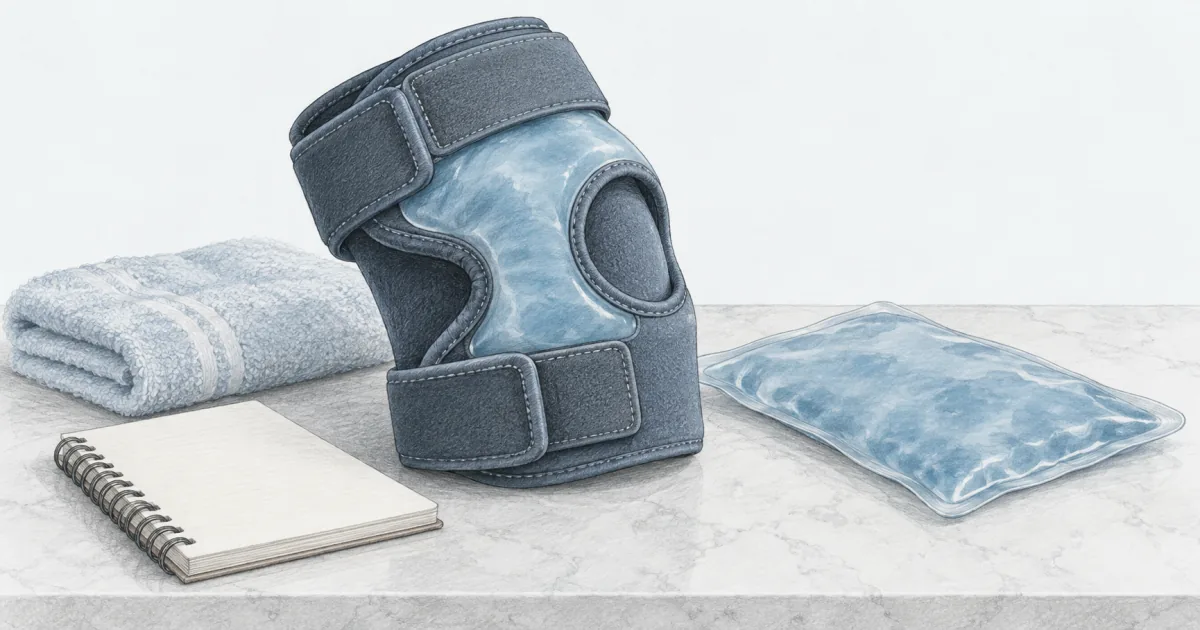
Best Ice Pack for Knee (2026): Knee-Specific Wraps for Pain and Recovery
Accessories
The best ice pack for knee is a wrap, not a flat gel pack. Start with the NEWGO Knee Ice Pack Wrap for 360-degree coverage, pick the TheraICE sleeve for a slip-on fit, and choose the PELEGON 2-pack if you ice both knees or want a rotation through daily sessions.
Our picks
The best ice pack for knee pain is a wrap, not a flat gel pack. A flat gel pack slides off the curved knee surface within a few minutes, especially when you bend the joint. A wrap or sleeve built for the knee shape stays in place during a 20-minute session, which is what most home icing protocols call for.
Below are the picks for buyers who want a knee-specific ice pack: a wrap that covers the joint 360 degrees, a slip-on sleeve for fast application, and a 2-pack rotation for daily icing. If you want a flat gel pack instead for shoulders, backs, or general use, see our general best ice pack guide. For longer circulating cold sessions after surgery, see our best cold therapy machine guide.
How a knee ice pack should fit
The knee is a curved joint that moves frequently. A useful knee ice pack should be flexible, comfortable, and easy to keep in position. The three jobs it has to do are cover the front, sides, and back of the joint, stay put when you bend the knee or stand up, and deliver cold without a towel barrier or messy condensation.
Wrap-style ice packs use straps to lock the pack in place. Sleeve-style ice packs use a stretchy sleeve that you pull over the knee. Both work. Wraps give a more secure fit for active users; sleeves give a faster application for users who want to slide the pack on without dealing with straps.
Coverage is the other variable. A 360-degree wrap covers all sides of the knee at once. A flat gel pack only covers one side. For arthritis, meniscus issues, or post-surgical swelling, 360-degree coverage is what makes the difference between a comfortable session and one where you keep repositioning the pack.
NEWGO Knee Ice Pack Wrap
This is the best ice pack for knee for most buyers who want a 360-degree wrap that stays in place. The NEWGO wrap measures 21.7 by 9.8 inches, which is enough to cover the front, back, and sides of the knee in one application. The Y-shaped strap splits above the patella so it pulls up over the quadriceps instead of sliding down the calf. The narrowed popliteal section is what stops bunching behind the knee when you bend.
The dual-sided cover is the practical touch. Use the plush side on a fresh flare-up or a post-surgical knee, where the cold needs to diffuse slowly. Use the nylon side when the knee is used to icing and you want deeper cold transfer. The gel stays pliable when frozen, so it contours to the knee instead of sitting against it like a stiff block.
Buy this if you want one wrap that covers the whole knee and stays in place through normal daily movement. Skip it if you need a sleeve you can pull on without adjusting straps, or if you ice more than three times a day and want a built-in rotation.
Owners who keep it in the freezer in the included bag report it stays cold for 25 to 30 minutes, which is at the longer end for a passive wrap. Two-pack rotations are common for post-surgery use.
When to choose something else
If you want a sleeve you slip on rather than a wrap you strap in place, the TheraICE Knee Ice Pack Wrap Compression Sleeve is the easier call. The sleeve stretches over the knee, so application takes about five seconds instead of a minute of strap adjustment. The trade-off is sizing: the sleeve runs in five sizes from S to XXL, so a poor fit reduces contact and lowers effectiveness.
If you ice both knees or want to rotate wraps through a daily icing schedule, the PELEGON Knee Ice Pack Wrap (2 Pack) keeps one wrap ready while the other refreezes. The wraps are lab-tested to hold their chill longer than typical single packs, and the secure strap system stays in place through normal daily movement. The molded shape conforms to the knee so cold transfer feels even, rather than sitting flat against one side of the joint.
For general icing on other body parts, see our best ice pack guide. For a heated option that doubles as a massager, see best knee massager.
Field notes from our testing
Knee ice pack vs cold therapy machine
A knee ice pack is the simpler home option. You freeze it, strap it on, and wait 20 minutes. No electricity, no pump noise, no ice to refill.
A cold therapy machine circulates cold water through a pad for longer sessions, which is useful after surgery when a clinician wants 45 to 60 minutes of continuous cold. The trade-off is cost, noise, and setup time.
Most home users start with a knee ice pack. Move to a cold therapy machine only when a specific rehab protocol calls for it, or when a passive wrap cannot keep up with daily icing volume.
When cold is not the answer
Cold is a useful comfort tool, but it does not suit every situation. Stop if a knee becomes more uncomfortable with cold, or if skin becomes painful, numb, blanched, or very pale. Skip cold therapy entirely if a clinician has restricted cold exposure after a specific procedure.
Persistent swelling, sharp pain, inability to bear weight, or progressive warmth deserves a clinician's eye rather than another icing session. Cold can mask symptoms for a while without changing the underlying problem.
Buying checklist before you click
- Measure the circumference of your knee before ordering a sleeve. Sizing is the main reason a sleeve fails.
- Check whether the wrap covers the back of the knee (popliteal area). Most wraps skip it, which leaves the joint half-covered.
- Confirm the wrap has a barrier cover. A plush or fabric cover lets you skip a towel barrier.
- Plan for a 2-pack rotation if you ice more than twice a day. Most wraps need 1.5 to 2 hours to refreeze.
- Match the wrap to the joint. Knee wraps are knee-specific. For shoulders or backs, get a general ice pack instead.
Final recommendation
Start with the NEWGO Knee Ice Pack Wrap if you want a 360-degree wrap that stays in place during normal daily movement. Pick the TheraICE Knee Ice Pack Wrap Compression Sleeve when you want a slip-on format and can match the size to your knee. Choose the PELEGON Knee Ice Pack Wrap (2 Pack) if you ice both knees or want a rotation through a daily schedule.
Use the affiliate links on this page when you buy. They support more recovery guides at no added cost. More home recovery reading lives on the blog, and the homepage points to current lanes.
Frequently Asked Questions
What is the best ice pack for knee pain?
For most buyers, the NEWGO Knee Ice Pack Wrap is the best pick because the 360-degree wrap stays in place while you walk or sit. If you want a sleeve you slip on rather than a wrap you strap in place, choose the TheraICE Knee Ice Pack Wrap Compression Sleeve in your size. If you ice both knees or want a rotation through daily sessions, pick the PELEGON Knee Ice Pack Wrap (2 Pack).
How long should I ice my knee?
Most home-use protocols recommend 15 to 20 minutes per session, with a towel or fabric barrier between skin and the pack. Stop if skin becomes painful, numb, blanched, or very pale. For post-surgical swelling, your discharge sheet will usually specify a different protocol with longer or more frequent sessions. Follow that advice if it is on your discharge sheet.
Should I use ice or heat on a sore knee?
Ice is usually the right call for acute soreness, swelling, fresh injury, or post-exercise inflammation. Heat is usually better for stiffness and pre-movement warm-up. Many people alternate cold and hot therapy depending on what the knee needs that day. If swelling and warmth are present, lead with ice. If the knee just feels stiff without swelling, lead with heat.
Is an ice pack good for knee inflammation?
Yes for short-term comfort and to take the edge off inflammation after activity. It is not a treatment for the underlying cause of inflammation. Persistent swelling, sharp pain, inability to bear weight, or progressive warmth deserves a clinician's eye rather than another icing session. Ice can help you stay comfortable while you wait for that appointment.
How often can I ice my knee in a day?
Most home protocols run 3 to 4 sessions per day for the first 2 to 3 days after an injury or surgery. A 2-pack rotation lets you keep one wrap on the knee while the other refreezes. After that initial window, taper to once or twice a day as the swelling eases. If you need more than 4 sessions per day, talk with a clinician.
Can I reuse a knee ice pack after a knee replacement?
Yes. Reusable gel wraps are designed for daily use through a full rehab cycle. The bigger question is hygiene. Wipe the cover between sessions and follow your discharge sheet for session length. The NEWGO, TheraICE, and PELEGON wraps above are all reusable for months under normal home use. Replace the wrap if the gel leaks, the seams split, or the cover stops staying clean.
Do I need a knee wrap or a flat gel pack for knee pain?
A knee wrap is usually the better choice for knee-specific pain because it stays in place while you walk, sit, or stand. A flat gel pack works for general icing but tends to slide off the curved knee surface. If you already have a flat gel pack that you like, see our general best ice pack guide instead. This page focuses on wraps and sleeves built specifically for the knee shape.
Knee ice pack vs cold therapy machine: which should I buy?
Buy a knee ice pack if you want a low-friction home option that requires no electricity, no ice, and no machine maintenance. Buy a cold therapy machine if you want longer circulating cold sessions after surgery and do not mind the noise and setup. Most home users start with an ice pack and only move to a machine when a rehab protocol specifically calls for it.