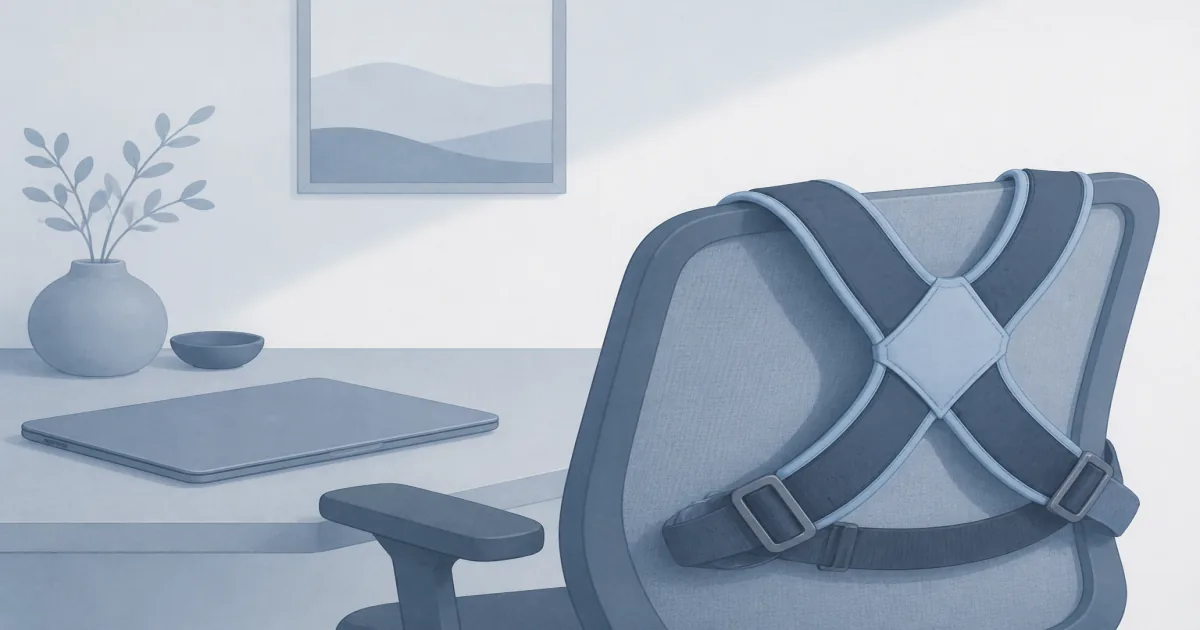
Best Posture Corrector (2026): WHCOOL, Figure-8, and Backpack Styles
Accessories
A posture corrector is a short, honest reminder to open the shoulders, not a spine fix. The WHCOOL 6-stay brace is the sturdiest desk-day pick, with a light figure-8 and a full-back harness alternate for anyone who wants less structure.
Our picks
A posture corrector gently pulls the shoulders back so your upper back stops folding into the screen. People reach for one after long laptop days, driving, or months of soft couches. It is a cueing tool, not a permanent fix, and it is not a tall lumbar belt for warehouse lifting or an SI belt for pelvic support.
Most of the category comes down to two shapes. A figure-8 brace crosses at the upper back and loops under the arms. A backpack-style brace uses wider straps across the shoulders. A third group adds stays for firmer structure, which is where the WHCOOL sits. All of them pull the shoulders back. The one you wear is the one that fits.
For night neck support, start with a cervical pillow. For seated lumbar cushioning, use a lumbar support pillow. For a wrap around the low back, see best back brace. The recovery accessories hub and the massage gun guide cover the rest of the small-support kit.
Quick comparison
How do the three picks compare on structure and price?
Why WHCOOL is our hero pick
The WHCOOL Slim-Fit Posture Corrector is the sturdiest of the three picks. Six stabilizing stays run two across the upper back and four around the waist, so it cues the shoulders and adds structure lower down instead of being a single soft strap. The cross-pull straps adjust independently, which means you can set the shoulder pull where you want it and keep the waist looser for breathing.
Put it on over a soft shirt the first week, then tighten the shoulder straps until they are snug but not painfully tight. Start with 15 to 20 minutes as the maker suggests, and build toward 90 minutes a session rather than all day. If your mid-back feels tired in a good way, that is the brace doing its job. If you feel numb fingers or sharp shoulder pain, loosen it or stop.
Buy WHCOOL when you want firmer, adjustable support for desk days and you do not mind paying a little more. Skip it if you want the lightest, cheapest cue, or if your pain sits low in the lumbar or around the SI joints. Those need different tools.
Lightest figure-8: Titan Luxe
The Titan Luxe Posture Corrector Figure-8 Back Brace is the light option. Adjustable figure-8 straps cue the shoulders without turning into a waist cinch. You put it on like a backpack, position the crossover below the shoulder blades, and tighten until snug. It sits flat under a shirt and costs the least of the three, which is why it stays in the stack.
If you only want a simple, low-cost reminder and the WHCOOL's stays feel like more structure than you need, this is the one to take. The tradeoff is exactly that: less structure, and the same rule about starting short so the straps do not rub.
Buy Titan Luxe when you want the lightest, cheapest cue. Step up to the WHCOOL when you want firmer support. Skip both when your pain sits low in the lumbar or around the SI joints.
Full-back alternate: BraceTop harness brace
If figure-8 straps irritate or you want a harness that also supports the lower back, the BraceTop Upgraded Posture Corrector is the full-back alternate. Amazon shoppers have rated it 4.1 across about 2,350 ratings, and it is an Amazon's Choice pick with 300+ bought in the past month. The wide straps spread the pull across the upper back, and the waist wrap keeps the support panel in place without a crossover under each arm.
Treat it as a preference swap, not a miracle upgrade. Both braces still fail if you yank them tight for eight hours on day one. The maker's own guidance, 15 to 20 minutes to start and roughly 20 minutes more each day, is the right way to build up.
The main types of posture corrector
Figure-8 straps are the most common. Two loops cross at the upper back and pull the shoulders back when you start to round forward. Titan Luxe lives here. They are light and easy to wear under a shirt.
Backpack or harness braces spread the pull across wider shoulder straps. They feel familiar if you have worn a pack, and the BraceTop Upgraded is one. They can be a little more visible, but they are simple to adjust.
Rod-reinforced braces add stays for firmer structure across the mid-back. The WHCOOL 6-stay brace lives here, with two back stays and four lumbar stays. They suit people who want more support than a soft strap, and they run a touch warmer under clothing.
Biofeedback wearables vibrate or ping when you slump. They cue without pulling, which some clinicians prefer. They cost more and need charging.
Do posture correctors actually work
They do a narrow job well. While worn, a brace changes your position and makes you aware of slouching. That awareness is the real benefit. What the evidence does not support is the idea that a brace permanently corrects posture on its own.
The practical version: use one for a few hours a day during your worst sitting block, do the strengthening work that keeps your upper back awake, and fix the desk. Raise the screen, bring the keyboard closer, stand up on a timer. A brace that replaces all of that is being asked to do a job it cannot.
If pain is the reason you are shopping, be honest about the pattern. A brace may ease strain while you sit. It will not diagnose why the pain started, and it is not a treatment for a spine condition.
How to choose a size that stays put
Measure where the brand chart tells you to measure. Figure-8 braces usually size around the chest. Harness styles often size around the chest or waist. Guessing is how people end up with a brace that slides up into the armpits.
Tension should be supportive, not painfully tight. You should still reach a keyboard, take a normal breath, and turn your head without the straps pinching. If you have to choose, go slightly looser and wear it for a shorter block.
Wash per the label and let it air dry. Sweat and lotion shorten strap life and make the hook-and-loop grip weaker over time.
Break-in and skin care
Wear a soft tee for the first week. Lotion under the straps can make fabric slip and then dig. If you get a hot spot, stop, check the size, and shorten the next session. Mild mid-back fatigue after a short block is common. Sharp joint pain is not.
Do not sleep in most posture correctors unless a clinician told you that exact model is for overnight use. Night is for pillows and recovery tools, not another harness.
Posture corrector vs lumbar brace vs SI belt
Upper-back cueing is this page. Lower-back wrapping for standing and lifting is best back brace. Pelvic-level SI support is best sacroiliac belt. Chair foam that stays behind you is best lumbar support pillow. Buy the one that matches where the problem sits.
Neck tightness after screen days may also want a neck massager in the evening. That is recovery, not posture training.
Realistic expectations
After two or three weeks of short, consistent wear, many people notice they catch themselves slouching faster even with the brace off. That is the useful outcome. Instant perfect posture for twelve hours is not how soft tissue adapts. If nothing changes because you wore it once for an entire movie night, the product did not fail. The plan did.
Questions buyers ask before a posture corrector
How long should you wear a posture corrector?
Start with 15 to 20 minutes a day and add about 20 minutes each day until you reach a 90-minute block. That ramp takes roughly a week. All-day wear from day one is how people end up with underarm rub and a brace they quit.
How do you size a posture corrector so it does not slide?
Measure where the chart tells you to measure, which is usually the chest for a figure-8 and the chest or waist for a harness. If you are between sizes, go slightly looser and shorten the block rather than cinching it tight.
How do you stop the underarm rub that makes people quit?
Wear a soft tee for the first week, size up if the straps dig, and keep the blocks short. Lotion under the straps makes fabric slip and dig harder, so skip it. Mild mid-back fatigue is normal; sharp joint pain is not.
When is a posture corrector the wrong buy?
Skip it after a recent shoulder or clavicle injury unless a clinician cleared that style. If your pain sits low in the back, a back brace or lumbar pillow is the better fit. If it is new or radiating, see a clinician first.
Bottom line
The best posture corrector for most desk buyers is one you will wear in short blocks. Start with the WHCOOL Slim-Fit Posture Corrector when you want firmer, adjustable support. Choose the Titan Luxe Posture Corrector Figure-8 Back Brace for the lightest, cheapest cue, or choose the BraceTop Upgraded as a full-back harness alternate if straps feel wrong. Measure once, start short, and fix the chair before you buy a second brace.
Frequently Asked Questions
What is the best posture corrector for most people?
The WHCOOL Slim-Fit Posture Corrector is the best everyday starting point if you want real structure. Its six stays cue the shoulders back without a full rib cinch. Step down to the Titan Luxe Figure-8 for the lightest, cheapest option, or the BraceTop Upgraded if you prefer a full-back harness without a figure-8 crossover.
Is there a posture corrector that actually works?
A strap brace can work in a narrow way: it reminds you to open the shoulders while you wear it. Therapy and spine-surgery sources agree it is a short-term awareness cue, not a permanent fix. Pair it with strengthening and a better desk setup or the effect fades.
What is the most effective type of posture corrector?
There is no strong evidence that one type beats another. Figure-8 straps suit rounded shoulders and clavicle cueing. Backpack or harness styles feel familiar if you dislike strapping under both arms. Stays add firmer structure, which is the WHCOOL 6-stay lane. Fit and comfort decide whether you actually wear it.
Do doctors recommend posture correctors?
Some do, usually as a short-term reminder alongside movement and strengthening, and usually for a few hours a day at most. Others point out that the evidence for lasting change is thin. If you have a spine or shoulder injury, ask before you buy.
How long should I wear a posture corrector?
Start with 20 to 30 minutes while sitting or standing calmly. Add time only if comfort stays steady. All-day wear from day one usually means underarm rub and a brace you quit.
Is a posture corrector the same as a back brace?
No. A posture corrector targets rounded shoulders and upper-back awareness. A lower back brace wraps the lumbar for standing and lifting days. An SI belt sits on the pelvis. Different jobs.
Can I wear it under clothes?
Many people do with a soft tee underneath. Smooth the straps before you layer. Avoid yanking so tight that the outline digs through a dress shirt.
Who should skip a posture corrector?
Skip it after a recent shoulder or clavicle injury unless a clinician cleared that style, if straps cut circulation, or if pain is new, radiating, or progressive. If your only issue is a soft office chair, fix the seat support first with a lumbar pillow.