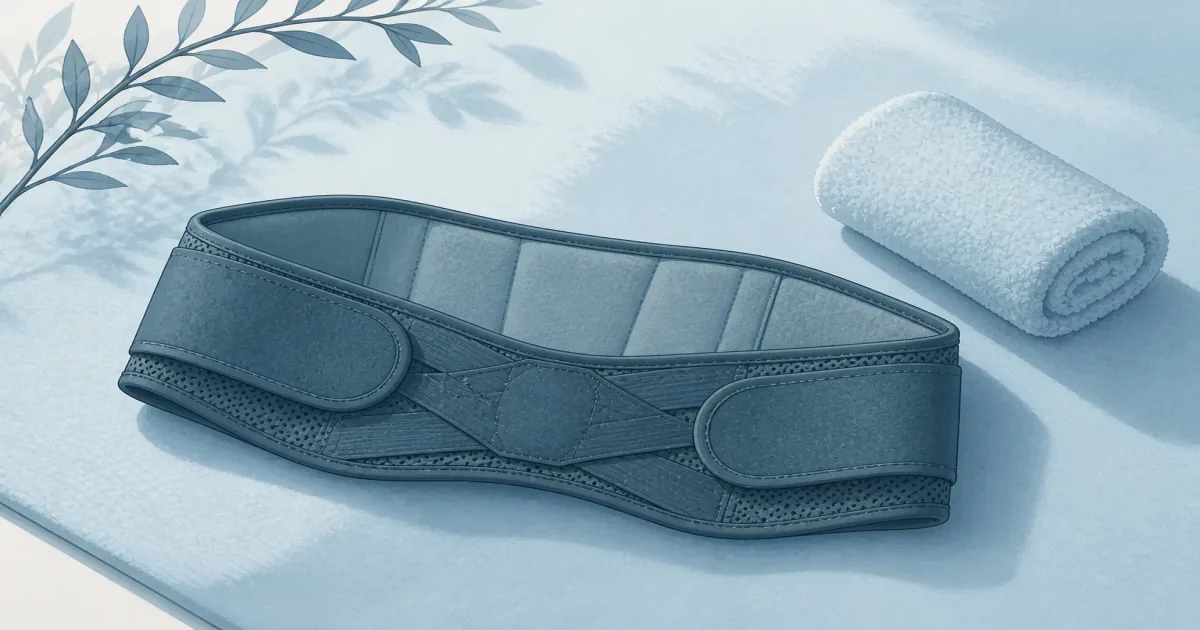
Best Sacroiliac Belt (2026): SI Joint Support for Daily Movement
Accessories
The best sacroiliac belt for most people is a low-profile hip belt you can tension evenly around the pelvis. Vriksasana is the practical everyday buy, with Serola as the clinical upgrade.
Our picks
A sacroiliac belt wraps low around the hips to support the SI joints at the back of the pelvis. People reach for one when walking, standing, or turning in bed leaves a sharp or unstable feeling near the dimples of the low back and hips. It is a different tool from a chair lumbar pillow or a full elastic back brace, and the fit is the whole product.
For a tall lumbar wrap while standing or lifting, see best back brace. For rounded shoulders at a desk, see best posture corrector. For seated lumbar cushioning, use best lumbar support pillow. For a stretch-focused back tool, see best back stretcher. The small tool guides cover the rest of the supports.
Which sacroiliac belt is best for most people?
The Vriksasana Posture belt is the best sacroiliac belt for most people because it covers a 32 to 45 inch hip range, costs about 8 cents a day over a year, and has the deepest review trail. Serola is the upgrade if your clinician named it.
Vriksasana Posture Sacroiliac Hip Belt
The Vriksasana Posture Sacroiliac Hip Belt is a widely reviewed hip-level belt with a wraparound double-strap design. The secondary straps let you add compression over one sore spot without cranking the whole belt, and the anti-slip inner band is what keeps it in place during walking and bending.
Read the size chart carefully. Hip measurement beats guessing from pant size. Owners around 40 inches of hip have found the Regular fits but needs near-maximum tension, so if you are at the top of a size band, look at the next size up.
Who it is for: daily wear, first-time SI belt buyers, and anyone who wants support that disappears under a normal shirt.
PlayActive Sacroiliac SI Joint Hip Belt
The PlayActive Sacroiliac SI Joint Hip Belt is built for adjustable compression. Two elastic tension straps let you set each side separately, which helps when one side of the pelvis is more irritated than the other. The anti-slip lining keeps it from riding up during activity.
Buy it if your symptoms change through the day and you want to re-tension quickly. Skip it if you want maximum surface area across the hip bones and do not mind a wider panel.
Who it is for: walkers, lifters, and anyone who wants to fine-tune tension on the move.
Serola Sacroiliac Belt
The Serola Sacroiliac Belt is the clinical default. Sizes run from 30 to 33 inches at the small end up to 46 to 52 inches at the extra large, measured around the hips rather than the waist. The design is meant to take the place of the ligaments rather than the muscles, which is why it can be worn for long stretches.
Who it is for: buyers whose clinician recommended it, and anyone who wants the most precise fit and does not mind paying about 16 cents a day over a year.
How do you size an SI belt correctly?
Measure around the hips where the belt will sit, standing, with one knee lifted to find the crease. Match that number to the brand's hip range, not your pants size, and size up if you land at the top of a band.
Measure at the hip crease, not the waist
Stand up. Lift one knee toward your chest and feel where the crease forms across the front of the hip. That crease is the belt height. Run a tape around the hips at that line, level all the way around.
Read the brand's hip range in inches
Serola also lists Small at 30 to 33 inches, Large at 40 to 45, and Extra Large at 46 to 52. A pregnancy extender adds about 8 inches.
What to do if you are between sizes
Size to the upper band if you are within an inch of the top, because a belt that is too small digs at the front and leaves the back panel doing nothing. If two adults plan to share one belt, buy for the primary wearer instead. A shared belt usually fits nobody.
How tight should an SI belt be?
Tight enough to feel support and loose enough to breathe and walk normally. If you feel tingling, see lasting skin marks, or the pain increases, loosen it or take it off. Compression is not the goal on its own.
Does an SI belt stay put under clothes?
Under clothing, the silicone grip strips on these belts hold well. Worn over clothing, the same grip can catch a waistband and drag the belt upward when you move between sitting and standing. A low-profile belt under a long shirt is the easier setup.
Sitting, standing, and stair tests
Do a three-part test on day one. Walk for ten minutes, stand at a counter for ten minutes, then sit and stand from a chair ten times. Note where pressure concentrates. Support should feel even across the back of the pelvis. Hot spots under a strap edge mean repositioning, not more tension.
If stairs bother you, test one flight slowly. A belt that climbs toward your waist mid-stair is placed too high, not too loose.
Clothing and climate
Breathable layers help. Thick seams under the belt can bruise after an hour. In hot weather, shorter wear blocks beat all-day sweat. In cold weather, you can wear the belt under a sweater as long as you can adjust it without undressing. Avoid lotion buildup under the contact area, because it makes the belt slide.
What an SI belt will not do
It will not replace physical therapy homework, strength work your clinician prescribed, or time off from a flare. It will not fix a soft office chair, and it will not make a heavy lifting day safe if load and form are the real problem.
Use it as targeted support during known trigger tasks. Keep the rest of your recovery stack boring and consistent: sleep, walks you tolerate, and heat after activity when it helps. A heating pad is a separate comfort step once the belt comes off. Do not sleep on high heat.
When should you skip an SI belt and see a clinician?
Skip the belt and get care if you have new trauma, progressive weakness, numbness in the groin or saddle area, or bowel or bladder changes. Pregnancy-related pelvic pain also deserves professional guidance rather than a self-fit brace.
A belt is a support tool. It is the wrong first buy if your only complaint is a soft office chair, and it is the wrong buy if you want aggressive immobilization after surgery unless your care team specified a model. If heat is what actually helps you, start with the heating pad guide instead.
Bottom line
The Vriksasana Posture Sacroiliac Hip Belt is the best sacroiliac belt for most shoppers who need a low-profile hip belt with a long review history. The PlayActive is the better pick if you re-tension through the day, and the Serola is worth the extra if your clinician pointed you to it. Measure for the pelvis, place it low, tension it evenly, and keep chair lumbar tools for chair problems. More recovery support guides are on the Recoverypicks blog and the home page.
Frequently Asked Questions
What is the best sacroiliac belt for everyday wear?
A slim hip-level belt you can tension evenly is the most practical default. The Vriksasana SI belt fits that job for most buyers who want support while walking or standing, and it costs about 8 cents a day over a year of wear.
How is an SI belt different from a lumbar brace?
An SI belt targets the sacroiliac joints around the back of the pelvis, low at the hip crease. A tall lumbar brace focuses on the lower back. If your issue is desk-chair lumbar support, see best lumbar support pillow.
Where should the belt sit?
Most SI belts sit low around the hips, not up at the waist like a fashion belt. Stand, lift one knee, and find the crease that forms across the hip. That crease is where the belt belongs.
How do I measure for an SI belt?
Measure the hips at the height where the belt will sit, not your waist and not your pants size. Vriksasana covers 32 to 45 inches, PlayActive covers 32 to 47, and Serola bands its sizes from 30 up to 52 inches.
How tight should an SI belt be?
Supportive, not numbing. You should be able to breathe and walk normally. Pins and needles, skin marks that last, or pain that increases all mean loosen it or take it off.
Does an SI belt stay put when you wear it over clothes?
Under clothes it stays put well, thanks to the silicone grip strips. Worn over clothing, the same grip can drag at a waistband and the belt can ride up when you sit and stand repeatedly.
How long should I wear it each day?
Start with short blocks during the tasks that bother you, then build only if comfort stays steady. Many people wear one for two weeks more continuously and then taper to activity only. Do not sleep in a belt unless a clinician told you to.
When do I need clinical care instead?
New trauma, progressive weakness, bowel or bladder changes, or pregnancy-related pain need professional guidance. A belt is a support tool, not a diagnosis.