Best Stretching Device (2026): Strap and Door Stretcher Picks for Home Use
Accessories
The best stretching device kit for home buyers pairs a loop strap with an over-the-door stretcher. The OPTP Stretch Out Strap handles hamstrings and shoulders. The UBING Door Leg Stretcher adds leverage for splits and lower-body work.
Our picks
A stretching device is the cheapest mobility upgrade you can buy for a home recovery kit. Most buyers start with one tool, use it for a month, and then realize they need a second one for a different kind of stretch. This guide is for US buyers building a small stretching kit without filling a closet with foam rollers and yoga wheels. Notes come from how these tools are actually used at home, not from a yoga studio demo.
For the rest of the recovery kit, start with the best foam roller for tissue work and the best yoga wheel for back opening. Body-part-specific stretchers live at best back stretcher, best calf stretcher, best hip flexor stretcher, and best neck stretcher. Browse the rest of the mobility gear on the accessories hub.
What to buy: a two-piece stretching kit
You do not need a wall of straps. A loop strap and a door stretcher cover most home stretching for under $30 combined.
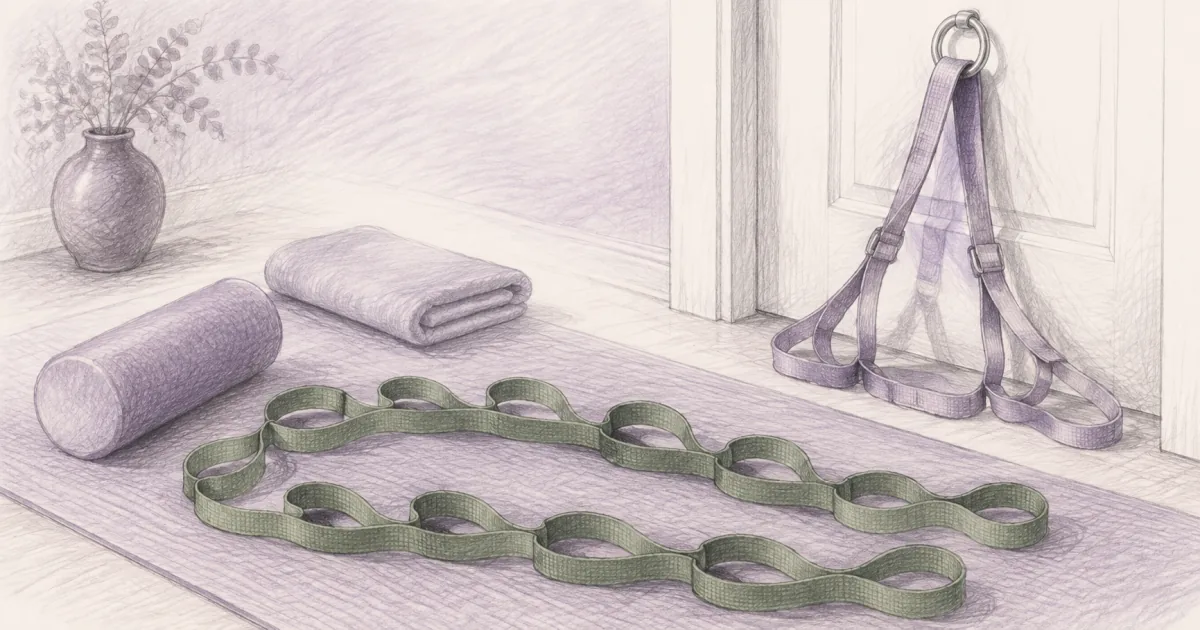
- Loop strap: The OPTP Stretch Out Strap with Exercise Book is a 6-foot woven nylon strap with 10 loops. Includes a 40-page exercise booklet so you can follow a routine without guessing.
- Door stretcher: The UBING Leg Stretcher is a 9.8-foot strap with adjustable loops that hangs over a closed door. Adds leverage for splits and hamstring depth that a floor strap cannot reach on its own.
OPTP Stretch Out Strap: best for daily mobility
The OPTP Stretch Out Strap is the strap most physical therapists and trainers reach for. It has been on the market since 1993, uses woven nylon rather than cotton, and has 10 loops spaced down the length. The loops are the trick. You slide your hand or foot into the loop that matches the depth you want, and the strap holds the limb in place while you relax into the stretch.
The 6-foot length is long enough for most users. Taller buyers can grip the end of the strap after the last loop, which adds another half-foot of reach. The strap does not stretch, so the loop stays where you put it. The 40-page exercise booklet that ships with the strap is a real booklet, not a pamphlet, and it walks through stretches for the lower body, upper body, and posture work.
Use the OPTP for hamstrings, calves, shoulders, and lying-down mobility work. The strap lies flat on a yoga mat, so it pairs naturally with a foam roller routine. Hold each stretch for 30 to 60 seconds and ease into the next loop when the current one feels comfortable. Skip the bouncing motion. A steady hold works better.
The recurring tradeoff is floor-only use. The OPTP does not give you leverage for splits, and it does not help with deeper lower-body work that needs the body off the floor. Buy a yoga wheel for back opening or add a door stretcher for splits.
Pick the OPTP if you want the strap most home buyers end up with. Skip it if you specifically need leverage for splits.
UBING Leg Stretcher: best for splits and lower-body depth
The UBING Leg Stretcher is the second half of the kit. It is a 9.8-foot strap with adjustable loops that hangs from a door anchor. The anchor slips over the top of a closed door, so you do not need to drill into the frame. The strap threads through a metal ring on the anchor, and you tighten the loops until you are at the angle you want.
The leverage is the reason to buy it. A floor strap relies on your arms to hold the leg in place, which means your arms tire before your hamstring does. A door stretcher holds the leg for you, so the stretch can sit longer and go deeper. That is the difference between a 30-second stretch and a 60-second stretch that actually changes range of motion.
The UBING works best for splits, hamstring depth, and any stretch where you want the body off the floor. It comes with a carry pouch and a quick-start guide, which is the right amount of packaging for a tool that travels. Most reviewers use it in a bedroom or a spare room with a sturdy closed door. Skip it if the only doors in your stretching space are open-arch frames or French doors with glass panels.
The recurring tradeoff is one-trick focus. The UBING is built for lower-body work. It does not help with shoulder mobility, and it is awkward for lying-down stretches. Pair it with the OPTP and the two tools cover the full stretching range for most home buyers.
Pick the UBING if you want splits work or deeper hamstring stretches. Skip it if you only need a strap for shoulder and hip mobility.
How to put a stretching kit together
Most home buyers stretch on a yoga mat in the same spot each day. Build the kit around that spot. Start with the OPTP on the floor for hamstrings and shoulders. Add the UBING on the door nearest the mat for splits and lower-body leverage. A foam roller sits next to the mat for tissue work between stretches.
Pick a daily window of 10 to 15 minutes. Stretching is a habit, not a workout, and the habit lands easier when the kit stays in one place. Leave the OPTP rolled next to the mat and hang the UBING on the door hook between sessions so the strap does not kink.
Body-part-specific tools fill in the gaps. The best calf stretcher handles plantar fascia and Achilles work. The best back stretcher opens the lumbar spine. The best hip flexor stretcher targets the hip flexors that get tight from sitting. None of those replace a strap, but they cover the spots a strap does not reach comfortably.
Common tradeoffs when you skip this category
The cheapest stretching tool is a bath towel tied in a loop. It works in a pinch, but cotton stretches under load, so the loop loosens during a hold. A woven nylon strap holds the loop in place for the full 60 seconds, which is the actual job.
Resistance bands are popular but they are not stretching devices. A band adds load to a stretch, which is a different training effect. If you want flexibility, use a strap. If you want loaded mobility, use a band, but expect a different result.
The fanciest stretching tool is a cable machine with multiple anchor points. That belongs in a gym. At home, a strap and a door anchor cover the same movements for a small fraction of the price.
Bottom line
Buy the OPTP Stretch Out Strap if you want a loop strap for hamstrings, shoulders, and the daily mobility work most home buyers do. Buy the UBING Leg Stretcher if you want leverage for splits or deeper lower-body work. The two together form the cheapest complete stretching kit, and they pair naturally with a foam roller and a yoga wheel for the rest of the recovery routine.
Body-part-specific stretchers fill in the rest. The calf stretcher, back stretcher, hip flexor stretcher, and neck stretcher cover the spots a strap does not reach. Browse the rest of the mobility gear on the accessories hub.
Frequently Asked Questions
What is the best stretching device for most home buyers?
The most useful kit pairs a loop stretching strap with an over-the-door stretcher. The strap handles daily hamstring, calf, and shoulder work. The door stretcher adds leverage for splits and deeper lower-body work. The OPTP Stretch Out Strap and the UBING Leg Stretcher cover both halves of that kit.
Do stretching straps actually work?
Yes, when you use the loops to hold the limb in place instead of grabbing the strap with your hands. The loops take over the job your grip would normally do, so the muscle stays relaxed and the stretch goes deeper. A strap is the cheapest way to add range of motion work to a daily routine.
Is a door stretcher better than a strap?
A door stretcher is not better, it is different. A strap is portable and handles shoulder, hip, and lying-down stretches. A door stretcher adds leverage for splits and hamstring depth, but it needs a sturdy closed door. Most home buyers end up using both.
Can a stretching device help with splits?
A door-mounted stretcher with adjustable loops is the most useful tool for splits because you can change the angle without a partner. A floor strap helps too, but it does not give you the same leverage once you get close to the floor.
How long should I hold a stretch with a strap?
Hold each stretch for 30 to 60 seconds and repeat two or three times per side. Use the loops to ease into the deeper position rather than pulling hard. A stretching strap works best as a steady hold, not a bouncing motion.
Are stretching straps safe for beginners?
Yes. Start in a lying-down position so gravity does the work and use the loosest loop you can. Move to the next loop only when the current stretch feels easy. Skip the door stretcher until the floor strap feels comfortable for a week or two.
What is the difference between a stretching strap and a yoga strap?
A stretching strap usually has fixed loops and a longer length for range-of-motion work. A yoga strap often uses a D-ring buckle for quick length changes. The OPTP Stretch Out Strap is the fixed-loop type, which works better for solo stretching at home.
Can I use a stretching device after an injury?
Stretching after an injury needs guidance from a clinician who knows the case. A strap is fine for general mobility once your doctor clears you. Skip the door stretcher until you have full range of motion back in the joint.