Best Ankle Ice Wrap (2026): Wraps That Stay Put on a Swollen Ankle
Accessories
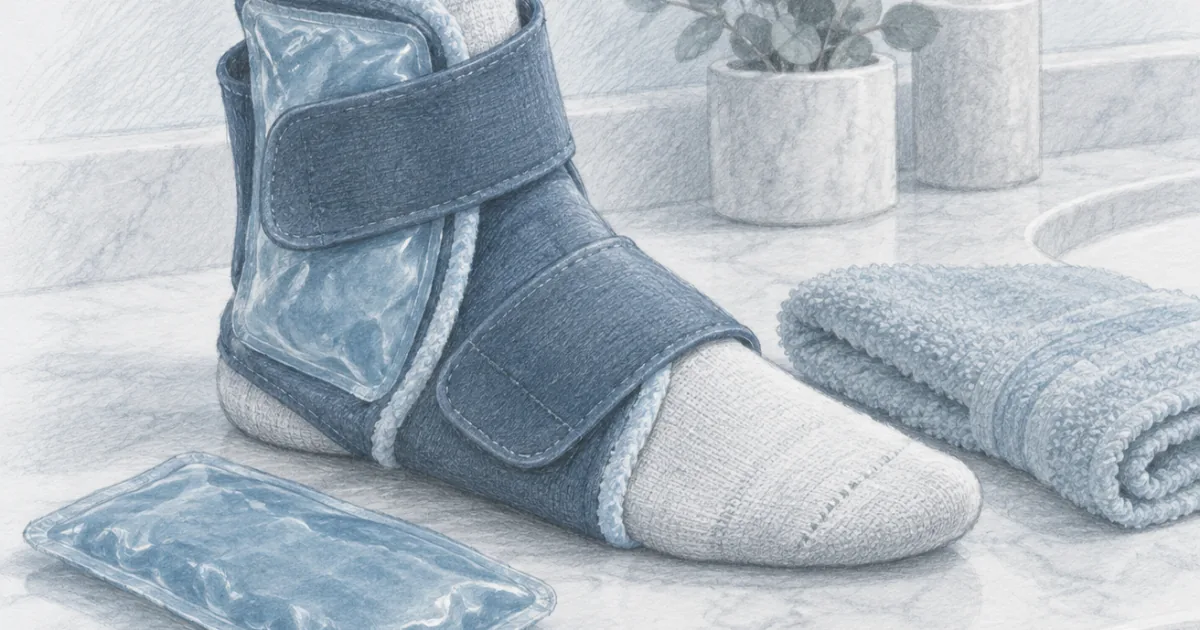
The best ankle ice wrap is the REVIX Ankle Ice Pack Wrap when you want full coverage and straps that hold it hands-free. Choose the TheraICE Ankle Ice Pack Wrap when you would rather slip on a sleeve with no straps at all.
Our picks
The best ankle ice wrap for most people is the REVIX Ankle Ice Pack Wrap because the straps hold it on a curved joint, while the TheraICE Ankle Ice Pack Wrap is the better pick if you want no fasteners at all. That is where a wrap earns its place over the pack in your freezer.
A flat gel pack is the wrong shape for an ankle. The joint is curved, bony on both sides, and it moves every time you shift your weight, so a flat pack slides off within minutes and leaves you holding it in place with your hand. That is why a wrap or a sleeve beats the pack you already have in the freezer.
The two picks below cover the two ways to solve that: a strap-on wrap with an adjustable fit, and a slip-on sleeve with no fasteners at all. Both cool the joint properly. The choice comes down to how much adjustability you want and how much patience you have for straps.
If you want a general cold pack for shoulders, backs, or knees, our best ice pack guide is the right starting point, and the best ice pack for knee covers knee-specific wraps. This guide stays on the ankle. Everything here sits in the recovery accessories lane alongside our massage gun picks.
Why an ankle wrap beats a flat gel pack
The test is simple. Freeze a flat pack, put it on your ankle, and try to stand up. It lands on the outside of the joint, slides when you move, and covers maybe a third of the area that is actually swollen.
A wrap solves that with straps. You set the tension once, cinch it, and the gel stays pressed against the front, sides, and back of the ankle at the same time. That hands-free fit is the entire reason this category exists.
A sleeve solves it differently. Stretch fabric pulls the pack over the foot and ankle like a sock, so there is nothing to fasten and nothing to adjust. You lose some compression control, and you gain speed and simplicity.
Whichever you pick, the gel matters as much as the shape. A pack that freezes rock hard will not contour to the ankle. A flexible gel stays pliable in the freezer and presses into the curves of the joint instead of hovering over them.
REVIX Ankle Ice Pack Wrap
This is the best ankle ice wrap for most people because it does the one thing a flat pack cannot: it stays on. Three adjustable straps hold the wrap against the front, sides, and back of the joint, so you can ice hands-free while you sit, stand, or move around.
The cover is two-sided. The plush face softens the initial cold and helps with condensation, which is the side to use on a fresh or sensitive ankle. The smooth nylon face transfers cold more directly, which is what you want once the joint is used to icing. The gel is filled to stay pliable at a low ice point, so it wraps the ankle shape instead of sitting on it like a block.
It is a reusable wrap, so it lives in the freezer in the included bag and comes out ready. Plan on a couple of hours between sessions, or pick up a second pack if you ice more than twice a day. It also tends to carry a small list-price discount, so it is a reasonable week to grab one if you have been waiting.
Buy it if you want full coverage with straps that keep it in place while you move. Skip it if weight matters to you, because it is noticeably heavier than a slim gel sleeve.
TheraICE Ankle Ice Pack Wrap
This is the strap-free option. It pulls on like a sock and covers the ankle in every direction, so the cold is not concentrated on one side of the joint. There is no Velcro to press and nothing to readjust mid-session.
Because it slips on, it is the easier pick if you are icing after a long day on your feet and want the least possible fuss. It works cold from the freezer, and it can be warmed for mornings when the ankle feels stiff rather than swollen. The sock shape also means it stays put under a loose pant leg, which makes it practical to wear while you read or work.
The trade-off is adjustability. A sleeve fit is what it is. If it is the right size, that is a tight, even hold. If you guessed wrong, there is no strap to take up the slack, so check the size chart against your ankle and foot before ordering. The same listing shows a snug fit is common, so size up if you are between.
Buy it if you want fast, fuss-free coverage and no fasteners. Skip it if you want to dial compression up and down through a session.
How to ice an ankle without hurting the skin
Keep a barrier between the pack and bare skin. Both picks here have a fabric side for exactly that, but a thin sock works too. Direct, prolonged contact is how people end up with a cold burn from a pack that felt fine at minute two.
Work in short sessions. Fifteen to twenty minutes is the usual home window, then give the skin at least an hour before the next one. Set a timer. The reason icing injuries happen is that a numb ankle stops sending the signal that something is too cold.
Elevate while you ice if there is swelling. Cold helps the symptoms, but getting the ankle above heart level does a lot of the actual work on the swelling. Ice on a propped-up ankle beats ice on an ankle you are standing on.
Check the skin when you take the wrap off. Pink and cool is normal. Waxy, white, or hard patches mean you overdid it. Let the skin come back to normal temperature before you ice again.
If you are icing on a schedule because of a recent sprain, pair it with the best ankle brace for the hours you are actually moving around. Cold treats the swelling, and a brace manages the joint while it heals.
What to check before you freeze it
Measure your ankle and foot first. Sleeves live or die on sizing, and strap-on wraps have size limits too even when they are sold as one size.
Open the freezer and find the space it will live in. A wrap that is close to two pounds takes up real room. If your freezer is packed, a slimmer sleeve or a flat pack is the more honest choice.
Decide how you will actually ice. Sitting on the couch with the ankle up calls for a wrap with straps. Icing at a desk or while you read calls for whatever is fastest to put on, which is usually the sleeve.
Check the refreeze time. Almost every gel wrap needs one to two hours between sessions. If you plan to ice three or four times a day, a second pack is not a luxury.
When ankle swelling needs a clinician
Cold and a wrap are home tools for minor twists, overuse soreness, and post-activity swelling. They are not the answer for every swollen ankle.
Get the ankle looked at if you cannot put weight on it, if the swelling came on fast and looks severe, if the joint looks deformed, or if you have numbness, severe pain, or signs of infection like heat and redness that keeps spreading. A wrap can hide a more serious injury for a day or two.
If the swelling is not improving after a few days of rest, ice, and elevation, stop managing it at home and get an opinion. That is the point where more icing stops being useful.
Bottom line
Start with the REVIX Ankle Ice Pack Wrap if you want an adjustable wrap that stays on while you sit, stand, or walk. Choose the TheraICE Ankle Ice Pack Wrap if you would rather pull on a sleeve and skip the straps entirely. Either one keeps cold on a curved joint better than the flat pack sitting in your freezer.
Buying through the links on this page supports more guides like this at no extra cost. Browse the rest of the recovery accessories picks, or start with the blog for the full home recovery stack.
Frequently Asked Questions
What is the best ankle ice wrap?
The REVIX Ankle Ice Pack Wrap is the best ankle ice wrap for most people because it covers the foot and ankle and the three straps keep it in place hands-free. Pick the TheraICE Ankle Ice Pack Wrap if you would rather slip on a sleeve than fasten straps.
Does icing an ankle actually work?
For short-term comfort and to take the edge off swelling after a twist or a long day on your feet, yes. Cold lowers tissue temperature and helps calm the immediate inflammatory response. It does not repair a ligament or speed up healing on its own. Think of it as a comfort tool that buys you a more tolerable evening.
How long should I ice my ankle?
Most home guidance is 15 to 20 minutes at a time with a fabric barrier between the pack and your skin. Then give the skin at least an hour before icing again. Stop if the skin turns painful, numb, blanched, or very pale. If a clinician gave you a different protocol after surgery, follow that instead.
Should I take the wrap off my ankle to ice it, or leave it on?
A thin sock is fine and can make the cold easier to tolerate. A compression sock plus an ice wrap on top can be too much at once. For a fresh sprain, some people ice over a light sock and skip the compression sock until the swelling settles.
Is an ice pack good for an ankle sprain?
It helps with pain and swelling in the first couple of days, especially with the ankle elevated. It is not a substitute for protecting the joint. If you cannot put weight on it, if the swelling is severe, or if the ankle looks deformed, get it checked before you keep icing at home.
Can I walk around with an ankle ice wrap on?
A strap-on wrap like the REVIX holds its position while you move, and that is its main advantage over a flat gel pack. Keep the walk short and the session under 20 minutes. For a fresh injury, staying off the ankle is doing more work than the wrap is.
How does an ankle ice wrap compare to a cold therapy machine?
An ice wrap is cheaper, quieter, and needs no setup. A cold therapy machine circulates cold water for longer sessions, which suits post-surgical protocols that call for 45 minutes or more. Most home users start with a wrap and only move up if a rehab plan requires it.