Best Massage Ball (2026): Cork and Rubber Options for Home Recovery
Accessories
The Rawlogy cork ball is a good massage ball for people who want a lightweight option that is easy to control against a wall or on the floor.
Our picks
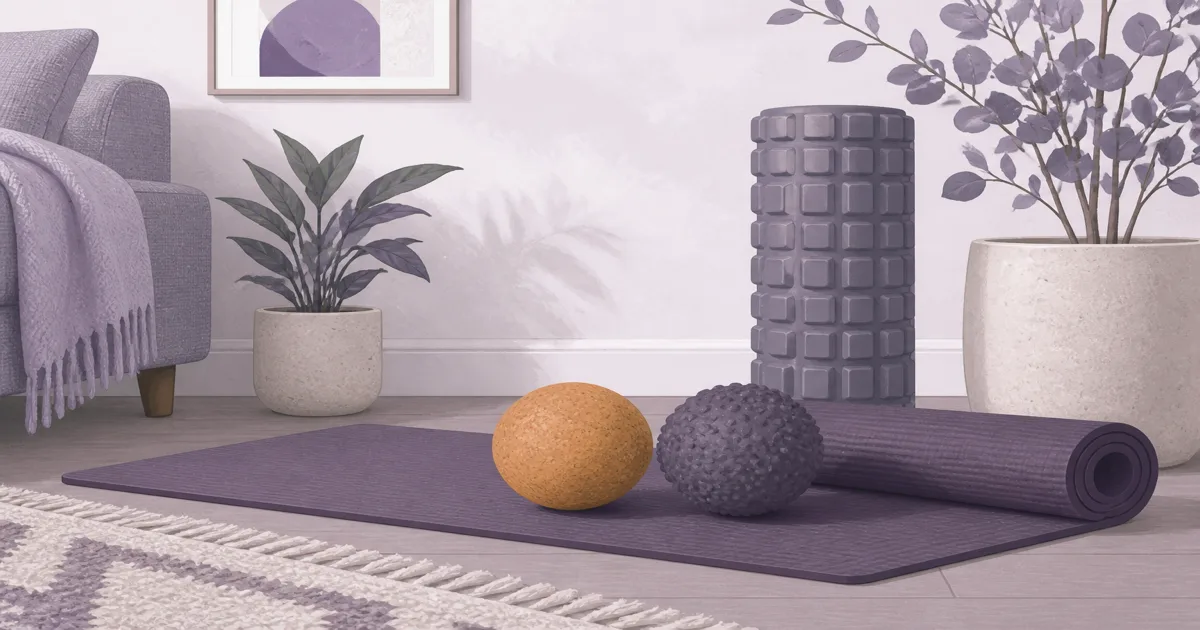
A massage ball is a simple tool. The real choice is surface and firmness. Cork is lighter and less slippery than a hard rubber ball. A textured ball can feel more intense. Start with the type you can control comfortably, not the one described as deepest or strongest. The accessory collection collects the other small recovery tools.
Why the Rawlogy cork ball is our pick
The Rawlogy Travel Cork Massage Ball is light enough to use against a wall, under a foot, or in a bag. Cork is easier to control than a hard rubber ball that skids. It is a better fit for a gentle, controlled routine than for someone who wants very hard pressure.
Start against a wall
Using a ball against a wall gives you more control than dropping your full weight onto it on the floor. Move slowly and keep pressure moderate. Spend a short time in one spot, then move on. Sharp pain, numbness, tingling, or bruising are signs to stop, not to press harder.
Where a ball works well
A ball can be useful for the upper back, glutes, feet, and the muscles around the shoulder blade when you can position it safely. Avoid rolling directly over the spine, joints, or a fresh injury. A foam roller is usually easier for large areas such as the thighs, while a ball is better for a small, reachable spot. If you want a handheld knob instead of floor or wall pressure, see best trigger point massager.
Bottom line
Choose the Rawlogy cork ball if you want something light and easy to control. Begin against a wall, keep sessions short, and use a foam roller when you need to cover a larger area.
If you want faster progress, use a simple pattern: warm up for a minute, hold the ball on the tender spot for 20 to 30 seconds, then move slowly to a new spot. Stop if you get sharp pain or tingling.
For more practical home-recovery buying advice, browse the Recoverypicks blog or return to the home page.
A final buying check
Before ordering, read the current product page rather than relying on an old screenshot or one review. Check the included parts, care instructions, dimensions, and return window. Those practical details decide whether a home recovery purchase is convenient enough to keep using after the first week.
Frequently Asked Questions
How should I choose?
Start with fit, current listing details, and recent buyer reviews.
Is this medical treatment?
No. These are home comfort tools, not medical treatment.
Should I start on the floor or against a wall?
Start against a wall, which gives you more control than dropping your full weight onto the ball on the floor. Keep pressure moderate and move slowly.
What size or firmness should I pick?
Cork is lighter and less slippery than a hard rubber ball, and a textured ball feels more intense. Start with the type you can control comfortably, not the deepest or strongest one.
Where should I avoid using a massage ball?
Avoid rolling directly over the spine, joints, or a fresh injury. A ball works better for a small, reachable spot like the upper back, glutes, or feet.
How do I know when to stop?
Sharp pain, numbness, tingling, or bruising are signs to stop, not to press harder. Spend a short time in one spot, then move on.