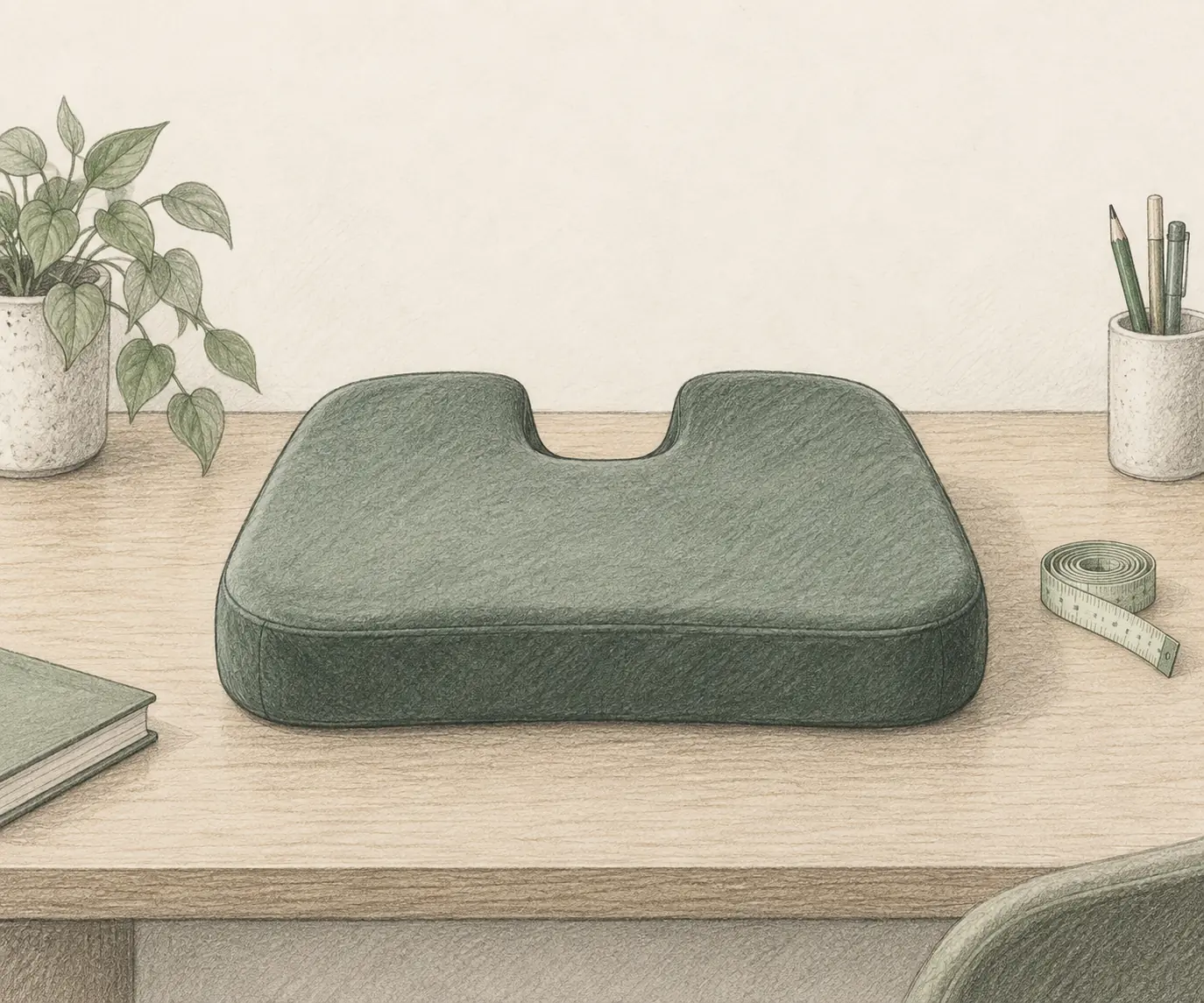
Best Seat Cushion for Office Chair (2026): Tailbone Relief That Stays Put
Accessories
The best seat cushion for an office chair is the Everlasting Comfort memory foam pad for most people with tailbone or sciatica pressure. Choose Cushion Lab for a contoured fit, or TushGuard on a budget.
Our picks
The best seat cushion for an office chair for most people is the Everlasting Comfort Seat Cushion. The C Cushion Lab Pressure Relief Seat Cushion wins for a contoured, posture-focused fit, and the TushGuard Seat Cushion is the value pick.
Most office chairs are built for the average sitter, which is not much comfort if your tailbone is sore by 2 p.m. A seat cushion with a cutout at the back floats that spot instead of pressing on it, and dense foam keeps the rest of your weight spread across your thighs. That is a simple fix that costs far less than a new chair.
A cushion is not the same as back support. If your lower back is the complaint, pair a cushion with a lumbar support pillow so the curve of your spine is supported too. Everything here lives in the recovery accessories aisle. If you want active kneading instead of passive support, see our best back massager picks. The best massage gun is the other portable option in this category.
What a seat cushion can and cannot fix
A seat cushion fixes pressure, not structure. It adds a layer that spreads your weight and takes the hot spot off your tailbone. That can mean the difference between a full afternoon at the desk and standing up every twenty minutes.
It cannot change your chair's shape or your desk height. If your chair is too deep, too low, or has a hard front edge, a cushion only partly helps. Fix the setup where you can, then use a cushion for the pressure that is left.
It also cannot replace a clinician. Sharp tailbone pain, sciatica that travels down a leg, or pain after a fall is worth a real diagnosis. A cushion is comfort, not treatment.
Everlasting Comfort Seat Cushion
This is the default pick because it does the core job well and costs less than the premium options. The memory foam is dense enough to survive daily use, and the cover is breathable and washable. It works on office chairs, car seats, and wheelchairs.
The main tradeoff is height. At about 2.75 inches, it lifts you enough that you may need to lower your chair or add a footrest. In a cold room the foam feels firm until your body heat warms it.
Buy it if you want tailbone relief and long-term durability. Skip it if you have a very shallow chair or you cannot change your seat height.
C Cushion Lab Pressure Relief Seat Cushion
This is the pick when you want contour and posture help, not just extra padding. The cushion is shaped rather than flat, with denser foam that keeps its form. It is also the best-looking option if the chair is visible in your home office.
It is taller and more expensive than the others. If your chair is low or your desk is not adjustable, the extra height can push your knees up.
Buy it if you want a premium contoured cushion and a grippy, strap-free fit. Skip it if you want a flat pad or you are on a tight budget.
TushGuard Seat Cushion
This is the budget pick that still gets the shape right. Pure memory foam, a coccyx hollow, a non-slip base, and a washable cover cover the basics. It also adds height, which some people want for posture.
Buy it if you want a low-cost first cushion or a second one for the car. Skip it if you need very firm support or you want the most durable foam.
Fit, height, and chair setup
Measure before you buy. Check that the cushion fits the seat pan without hanging over the front edge, and think about how much height you can add before your feet stop touching the floor.
Fix your chair once the cushion is on. Lower the seat so your feet rest flat, then set your desk so your elbows sit near a right angle. A cushion without those adjustments can leave you more uncomfortable than before.
Give the cushion a week. Memory foam softens with body heat and settles into a shape, so the first day is not the final feel. If it still hurts after a week, the shape or the height is wrong for you.
Keep the cover clean. Sunscreen, sweat, and crumbs all break down foam over time. A washable cover is the difference between a cushion that lasts a year and one that lasts three.
Who should skip a seat cushion
Skip it if your discomfort is in your lower back, not your tailbone. That usually calls for lumbar support and a better chair setup. Our lumbar support pillow guide covers that.
Skip it if you want active massage while you sit. A passive foam cushion does not knead anything. A back massager is the electric option for chair or recliner, and a massage gun handles targeted knots.
Skip it if you have a wound, a recent surgery, or a clinician's advice against pressure changes. Ask before you add anything to a healing seat.
Bottom line
Start with the Everlasting Comfort Seat Cushion for tailbone relief that lasts, choose the C Cushion Lab Pressure Relief Seat Cushion for a contoured fit, or pick the TushGuard Seat Cushion to spend less. Put the cutout under your tailbone, adjust your chair height, and give the foam a week to settle.
Buying through the links on this page supports more guides like this at no extra cost. Browse the rest of the recovery accessories picks, or start with the blog for the full home recovery stack.
Frequently Asked Questions
What is the best seat cushion for an office chair?
The Everlasting Comfort Seat Cushion is the best pick for most people. Its U-shaped cutout takes pressure off the tailbone and the dense foam holds up through a full workday. Choose the
C Cushion Lab Pressure Relief Seat Cushion
for a more contoured fit, or the TushGuard Seat Cushion if you want to spend less.
Do seat cushions actually help tailbone pain?
Yes, if the shape is right. A cushion with a cutout at the back floats your tailbone instead of pressing on it, and that is the point of a coccyx cushion. A flat pad with no cutout mostly adds height. If pain is sharp or getting worse, see a clinician.
Where should the cutout go?
At the back of the seat, directly under your tailbone. That spots the pressure off the sensitive area and moves your weight to the thighs and hips. If the cutout sits between your legs, you have it backwards and it will not help.
Will a seat cushion fix my posture?
It can help, but it is one piece of a setup. A cushion lifts your hips and can tilt your pelvis into a better position. Chair height, desk height, and back support still matter. Many people pair a seat cushion with a lumbar support pillow for the lower back.
How thick should a seat cushion be?
Two to three inches is plenty for most office chairs. Thicker cushions add comfort but also lift you higher, so your knees rise and your desk starts to feel low. If you go thick, lower the chair or add a footrest to keep your knees near a right angle.
Is a seat cushion the same as a back massager?
No. A seat cushion is passive support for your seat bones and tailbone. A back massager is an electric pad that kneads your back while you sit. Some people use both, but each one does a different job.
Can I use a seat cushion in the car?
Yes, and many people do. Just check that the added height still lets you reach the pedals and see over the wheel. A cushion that raises you too much in the driver's seat is a safety problem, not a comfort win.
When should I skip a seat cushion?
Skip it if your pain is in your lower back rather than your tailbone. Back pain usually calls for lumbar support and better chair setup, not a seat pad. Skip it too if a clinician has told you to avoid pressure changes or you have a wound or recent surgery in that area.