Compression Boots (2026): Full-Leg Recovery Picks for Home
Accessories
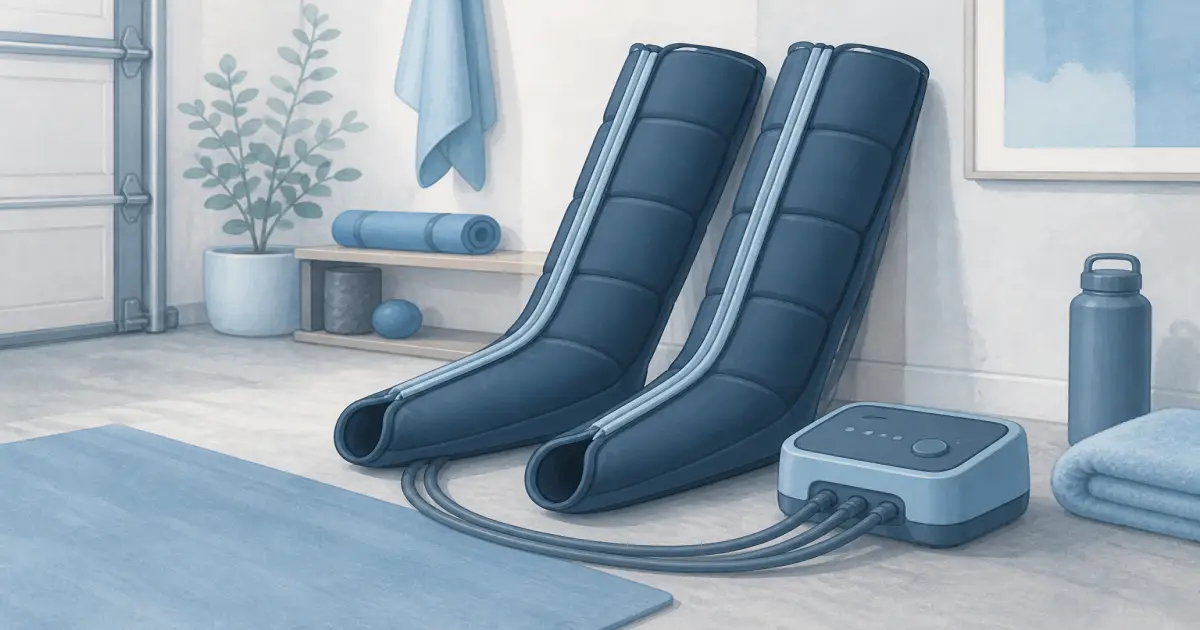
Compression boots squeeze your legs in sequence to feel like a clinic recovery session at home. Pick zones and power first, then size the sleeves honestly. The CINCOM 6-zone runs 50 to 150 mmHg, and 150 is above a resting systolic blood pressure, which is why you start low.
Our picks
Compression boots used to live in training rooms. Home versions do the same basic job: sequential squeeze, timer, unzip, drink water. Chambers inflate so pressure moves up the leg. That feels like a slow, even squeeze rather than a massage gun thump. More zones give you more places to turn the intensity down if a knee or ankle hates the default program.
Noise is real. These are small air pumps. A quiet room will hear them. Headphones help, and a garage already has worse sounds. If you have DVT risk, neuropathy, or post-surgical questions, talk to a clinician first, because these are recovery gadgets rather than medical devices.
If you only care about lower legs, start with a calf massager instead. Feet after standing shifts may want a foot massager. The compression socks guide is the wear-all-day version when you do not want a pump. The small tool guide collects the rest of those recovery tools, and its starting point is the best massage gun.
Which compression boots are best for most people?
The CINCOM 6-zone system is the best pick for most homes, with six independently controlled chambers and 11 intensities from 50 to 150 mmHg. The QUINEAR cordless is the pick when the outlet is the blocker, and the corded QUINEAR is the value option.
CINCOM Leg Compression Massager, 6-Zone
The CINCOM Leg Compression Massager is the home default. Six independently controlled air chambers let you emphasize foot, calf, or thigh, and 11 intensity steps from 50 to 150 mmHg plus three modes cover most after-run or after-shift nights. It comes in Small, Medium, and Large, is FSA/HSA eligible, and the zipper design is easier than a strap system for older users or anyone in rehab.
Choose CINCOM if: you want the most zone control and a dedicated recovery spot. Skip CINCOM if: you need true travel-only cordless or you only want calf coverage.
QUINEAR Professional Cordless Air Compression Boots
The QUINEAR Professional Cordless Air Compression Boots are the battery pick. The pump rides with you to the sofa or a hotel room. Twelve intensities and a wider timer range help if 20 minutes is never quite your number, and the travel bag is part of the point.
Choose QUINEAR cordless if: the outlet is across the room from the only comfortable chair, or you travel with recovery gear. Skip it if: you hate charging another device, or you want the extra CINCOM zone control.
QUINEAR Leg Recovery Compression System (Medium)
The QUINEAR Leg Recovery Compression System is the simpler corded kit. Four chambers, 8 intensities, 3 modes, and a hose back to a plug-in controller. You still get sequential full-leg compression without paying for six-zone or battery hardware, and it has the longest owner trail in the category.
Choose QUINEAR corded if: you want to test the category at a lower spend, or you have shorter legs and need the size flexibility. Skip it if: you already know you want zone-by-zone control or cordless use.
How much pressure do compression boots actually apply?
Home boots run roughly 40 to 160 mmHg, and the picks here cover 50 to 150 and 50 to 120. That is a wide range, and the top end is stronger than most people expect. Start near 50 to 60 mmHg and work up over weeks, not sessions.
What mmHg means next to blood pressure
Millimeters of mercury is the same unit on your blood pressure reading. A resting systolic pressure is about 120 mmHg. That means the CINCOM's top setting of 150 mmHg is above a typical resting systolic pressure, which is exactly why the low settings exist and why you should not start at the top because it is there.
The sensation at 50 to 60 mmHg is a firm cuff squeeze. At 120 to 150 mmHg it is a deep, deliberate compression, and it earns its place only after you know how your legs respond.
More chambers mean more precise compression, not necessarily more pressure. Six zones let you isolate the foot, the calf, or the thigh. Four zones cover the full leg in sequence. Either is enough for daily recovery, and the extra zones matter most when one specific area is sore.
How many minutes a week is the habit?
Five sessions of 20 minutes is 140 minutes a week, a little over two hours. That is the whole commitment. The hardware fades into the background and the routine is what decides whether you get anything from it.
The 20-minute session, five times a week
The timers on these units stop at 15, 20, or 30 minutes for a reason. A 20-minute session after training or after a standing shift is the sweet spot. Five of those a week is 140 minutes, which is a realistic habit for most people.
Two habits make it stick. Put the pump where you already sit when you are done, and run one short low-intensity session the first night so the sound and the squeeze are not a surprise when you are already exhausted. Hydrate, unzip slowly, and do not walk around trailing hoses.
If you also ice or cold plunge, do not stack a cold plunge immediately before a max-intensity boot session just because a video did. Pick one stressor per hour until you know how you respond.
What does a compression boot session cost?
Between 60 and 80 cents a session across the three picks, which makes the cost difference small next to the fit difference. The corded QUINEAR is the cheapest per session, and the CINCOM 6-zone costs about 14 cents more per session for two extra zones.
Spread over 500 sessions the gap between the cheapest and most expensive pick is about 20 cents a session. That is the honest way to compare them. Pick the one whose power and zone count fit how you will actually use it, because a system you do not unzip is worth nothing per session at all.
Compression boots versus smaller tools
Boots are the full-leg, sit-still option. A calf massager is cheaper, faster to put on, and easier to travel. A foam roller is free after you own it, but it asks you to work. A massage gun is one-spot percussion. Knee-high compression socks are the wear-all-day version when you do not want a pump.
Buy boots when the whole leg feels cooked and you will protect 20 minutes. Buy a smaller tool when the complaint is one region or you will not sit still.
How do I size compression boots correctly?
Measure your thigh and calf at the widest points, then check the inseam against the full-leg length. Size by measurement, not height, and size up rather than guessing. A sleeve that cannot zip is the wrong size, not a more intense fit.
Most boots fit up to about 21 inches at the calf, and the full-leg systems come in Small, Medium, and Large. Shorter inseams can find a full-leg boot rides higher than ideal, so measure before you order. Re-measure after big training blocks if your legs change, because ego sizing is how people return boots that actually fit fine in a different size.
Care and when to replace
Wipe the inner fabric after each session and let it dry before the next zip. Keep the hoses unkinked and store the sleeves unzipped so they are ready to wear. Do not overinflate past comfort.
The category's weak point is durability. Air-chamber leaks around the six-month mark are the recurring failure in owner reports, so treat the hoses and zippers carefully and replace a pump that starts to scream or a sleeve that splits at the zipper.
The bottom line
Choose the CINCOM Leg Compression Massager (6-Zone) for most homes, because six independently controlled chambers and an 11-step 50 to 150 mmHg range give you the most control for about 74 cents a session. Take the QUINEAR cordless when the outlet is the blocker, and the corded QUINEAR Leg Recovery System when you want the lowest per-session cost and a pressure sensor that adjusts to your leg size. Start on low intensity, keep sessions to 20 minutes, and measure your legs before you order.
Frequently Asked Questions
What are the best compression boots for most people?
The CINCOM Leg Compression Massager (6-Zone) is the default. Six independently controlled chambers and a 50 to 150 mmHg range beat a fancier brand name you will not use.
Do compression boots need to be cordless?
Only if you refuse to sit near an outlet. A corded pump is simpler for a dedicated recovery corner. Cordless helps travel and shared living rooms, but it costs more and can run out mid-session.
How long should a session last?
Most home units run 15 to 30 minutes, and the built-in timers stop at 15, 20, or 30 minutes. Start on a low intensity around 50 to 60 mmHg. Stop if you feel pins-and-needles, color change, or pain.
Are compression boots the same as a calf massager?
No. Boots cover foot through thigh. A calf massager is a smaller wrap for lower legs. Buy boots when you want the full-leg clinic feel.
Who should skip compression boots?
Anyone with circulation, clotting, or heart questions should talk to a clinician first. These are sports-recovery gadgets, not medical devices we prescribe.
How do I pick the right compression boot size?
Measure your thigh and calf before choosing Small versus Large, and check the inseam against the full-leg length. A sleeve that cannot zip is the wrong size, not a more intense fit.
Is 150 mmHg too much pressure?
For a first session, yes. A resting systolic blood pressure is about 120 mmHg, so start near 50 to 60 mmHg and work up over weeks. More pressure is not automatically better recovery.
Why do compression boots fail?
Air-chamber leaks around six months are the recurring failure in owner reports. Keep hoses unkinked, do not overinflate past comfort, and replace a pump that starts to scream.